Choosing Between a 12″ and 14″ Bandsaw Comes Down to More Than Inches
When you start shopping for a bandsaw, the size debate between 12″ and 14″ models surfaces almost immediately. Both sizes have loyal followings, and for good reason. The right choice depends less on which machine looks better on paper and more on how you actually work in your shop. A 12″ bandsaw handles light to medium tasks with surprising competence, while a 14″ bandsaw opens the door to resawing and thicker stock. Before you invest hundreds or even thousands of dollars, understanding the practical differences between these two sizes will save you from buyer’s remorse and help you match the tool to your actual needs.
Key Factors That Separate 12″ and 14″ Bandsaws
- Throat capacity determines how wide a board you can cut, with 12″ models handling up to roughly 11.5″ and 14″ models reaching about 13.5″ in practice
- Resaw height varies significantly, with most 12″ saws maxing out around 4″ to 6″ while 14″ saws often reach 6″ to 12″ depending on the model
- Motor power typically starts at 3/4 HP to 1 HP for 12″ saws and 1 HP to 3 HP for 14″ saws
- Frame rigidity tends to be lighter on 12″ models, which can affect vibration and cut quality on demanding tasks
- Price ranges generally span $300 to $700 for quality 12″ saws and $500 to $2000 for 14″ saws
- Weight and footprint matter for small shops, with 12″ saws often weighing under 100 pounds while 14″ saws can exceed 200 pounds
Understanding Throat Capacity and Why It Matters for Real Projects
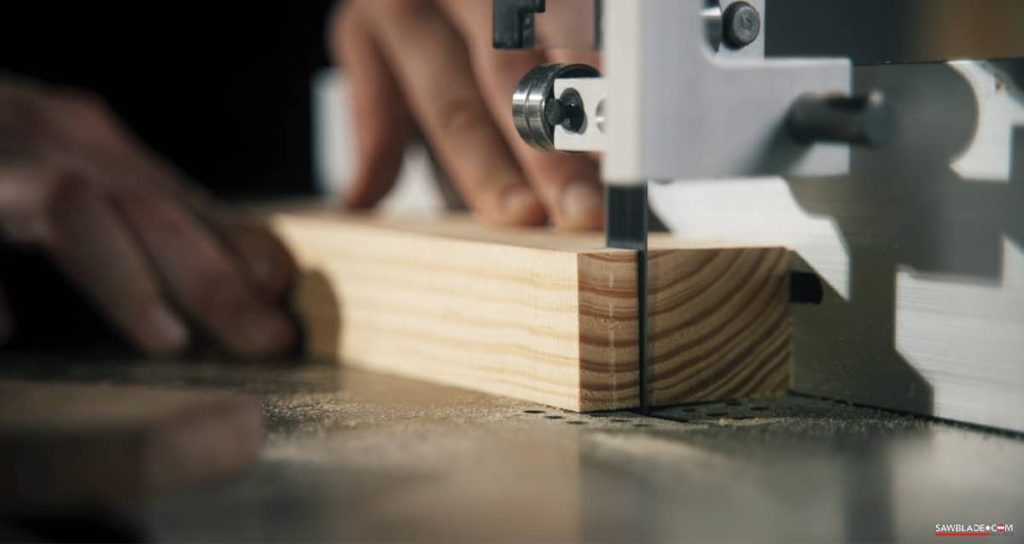
Throat capacity refers to the distance from the blade to the vertical frame section behind it. This measurement limits how wide a board you can pass through the saw for curved cuts or ripping operations. A 12″ bandsaw gives you roughly 11.5″ of working throat, which handles most furniture parts, small boxes, and general curved work without issue. The 14″ bandsaw adds about two more inches of clearance, which might sound minor until you find yourself cutting wide panels or larger bowl blanks. For the majority of hobby woodworkers doing small to medium projects, 12″ throat capacity covers the task. Once you start working with larger stock regularly, those extra inches on a 14″ bandsaw become more valuable than they appear on a spec sheet.
Resaw Capacity: Where the 14″ Bandsaw Pulls Ahead
Resawing means slicing a board through its thickness to create thinner pieces, veneers, or bookmatched panels. This operation demands blade stability, motor power, and sufficient height under the blade guides. Most 12″ bandsaws struggle here, offering resaw heights between 4″ and 6″ with motors that labor under the load. A 14″ bandsaw with proper setup can handle resaw heights of 6″ to 12″, depending on the riser block configuration. Users who regularly resaw hardwoods consistently report that underpowered saws make the process painfully slow. If resawing is part of your plans, a 14″ bandsaw with at least 1.5 HP becomes the practical minimum, though many experienced woodworkers recommend stepping up to 3 HP and 220V power for serious resaw work.
12″ vs 14″ Bandsaw Specifications Comparison
| Specification | 12″ Bandsaw (Typical) | 14″ Bandsaw (Typical) |
| Throat Capacity | 11″ to 11.75″ | 13″ to 13.5″ |
| Resaw Height | 4″ to 6″ | 6″ to 12″ |
| Motor Power | 3/4 HP to 1 HP | 1 HP to 3 HP |
| Blade Length | 72″ to 80″ | 93″ to 105″ |
| Table Size | 12″ x 12″ | 14″ x 14″ or larger |
| Weight | 70 to 120 lbs | 150 to 300 lbs |
| Voltage Options | 110V | 110V or 220V |
| Price Range | $300 to $700 | $500 to $2000+ |
Motor Power and Voltage Considerations for Each Size
The motor often determines whether your bandsaw performs smoothly or bogs down under load. A 12″ bandsaw typically runs a 3/4 HP to 1 HP motor on standard 110V household current. This setup handles curves, scrollwork, and light ripping in softwoods and thinner hardwoods without complaint. Moving up to a 14″ bandsaw opens options for larger motors, and this is where voltage becomes a real consideration. Many serious woodworkers running 14″ saws recommend 220V power paired with a 1.5 HP to 3 HP motor. The difference shows up during resawing, where a 1 HP motor struggles through 6″ of maple while a 3 HP motor feeds steadily. If your shop only has 110V outlets, you can still run most 14″ saws, but expect slower feed rates on thick stock. Installing a 220V circuit costs a few hundred dollars and pays dividends in performance over the life of the saw.
When a 12″ Bandsaw Makes Perfect Sense
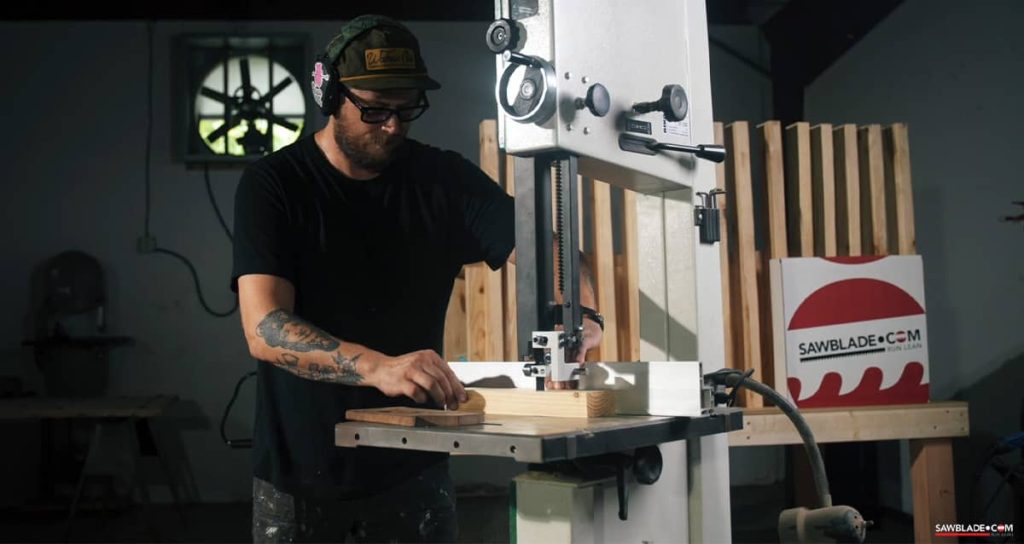
- Your primary work involves cutting curves, scrollwork, and shapes in stock under 3″ thick
- Shop space is limited and a lighter, more compact saw fits your layout better
- Budget constraints make the $300 to $700 price range more realistic
- You rarely work with boards wider than 10″ for curved cuts
- Resawing is occasional and limited to thinner material under 4″
- Portability matters because you move tools between locations
- You already own a table saw for straight ripping and need the bandsaw mainly for curves
The Hidden Value in Older 12″ Bandsaws
Vintage 12″ bandsaws from the 1970s through 1990s sometimes outperform newer budget models in build quality and vibration dampness. Older machines were often constructed with heavier castings and tighter tolerances before manufacturing shifted overseas. A well-maintained older 12″ saw can serve reliably for decades with nothing more than occasional bearing replacement and standard upkeep. One practical consideration when buying used is that some legacy brands no longer manufacture bandsaws under their original ownership. Modern versions of familiar brand names may actually be rebranded machines from other manufacturers, so researching the actual origin of any saw helps set accurate expectations. A solid older 12″ bandsaw purchased for a few hundred dollars can deliver better performance than a cheap new saw at the same price point.
ALSO WORTH READING
Ready to Upgrade Your Bandsaw’s Cutting Capacity?
If you own a 14-inch bandsaw and want to tackle larger projects, adding a riser block can make a real difference. Our step-by-step installation guide walks you through the entire process, from removing the upper wheel housing to properly aligning the blade after installation. Check out the full 14-Inch Bandsaw Riser Block Installation Guide to get started on this straightforward upgrade.
Situations That Call for a 14″ Bandsaw
- Resawing lumber into thinner boards or veneers is a regular part of your work
- You turn bowls or make blanks that require cutting through 6″ or thicker stock
- Projects frequently involve wide panels that exceed 11″ for curved cuts
- Future growth in your woodworking skills points toward more demanding projects
- Budget allows for $800 to $1500 or more for a quality machine
- Your shop has space for a heavier saw and potentially 220V power
- You want a single bandsaw that handles both detail work and heavy resawing
Real Workshop Usage Patterns Worth Considering
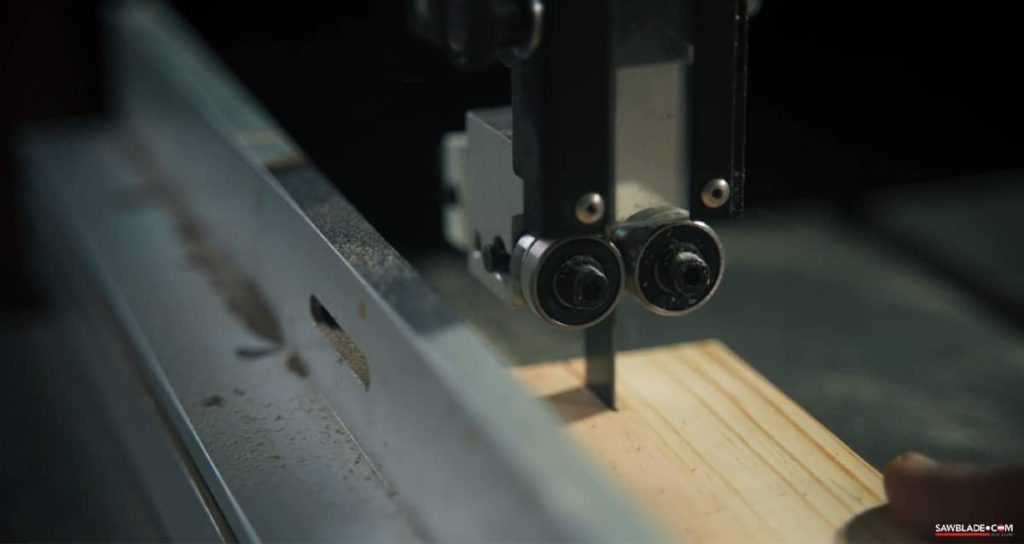
How you actually use a bandsaw day to day reveals more than specifications alone. Many woodworkers who own both sizes report that their 12″ saw handles 60 to 70 percent of their bandsaw tasks. Curved cuts, template work, and shaping operations rarely demand the extra capacity of a 14″ machine. The larger saw earns its keep during resawing sessions and when working with thick or wide stock. This split suggests that a quality 12″ bandsaw serves as an excellent first machine for developing skills, while the 14″ size becomes more valuable as your projects grow in scale and complexity. Workshop veterans often note that choosing the right blade for your specific cut matters as much as the saw itself. A well-tuned 12″ saw with a quality blade outperforms a neglected 14″ saw running a dull blade every time.
What to Look for Beyond the Size Number
- Table flatness and size affect workpiece support and accuracy during cuts
- Blade guide quality determines how well the blade tracks and resists deflection
- Fence system rigidity matters especially for resaw operations where drift causes problems
- Dust collection port diameter should match your shop vacuum or dust collector
- Blade tensioning mechanism quality affects how easily you maintain proper tension
- Motor amperage draw indicates real power more accurately than HP ratings alone
- Availability of replacement blades and accessories for your specific saw keeps the machine running long term
Making Your Final Decision Between 12″ and 14″ Bandsaw Sizes
The choice between a 12″ and 14″ bandsaw ultimately reflects your current work, future plans, and practical constraints. A 12″ bandsaw serves admirably for curve cutting, light ripping, and general shop tasks where extreme capacity is not required. It costs less, weighs less, and fits into tighter spaces while still delivering solid performance for most hobby woodworkers. A 14″ bandsaw expands your capabilities significantly, especially for resawing and working with thicker stock, but demands more investment in money, space, and potentially electrical upgrades. If budget allows and you see yourself growing into more ambitious projects, the 14″ size offers room to develop without outgrowing the tool. If your needs center on curves and lighter work with occasional resaw duty, a quality 12″ bandsaw handles the job without compromise. Either size, properly set up and maintained with sharp blades, becomes a reliable partner in your shop for years of productive work.