Why Bandsaw Wheel Position Affects Cutting Results
The position of a bandsaw’s wheels has a direct impact on how the blade behaves during cutting. When the upper and lower wheels are not aligned in the same plane, problems such as blade drift, uneven cut lines, vibration, and tire wear may appear. A short alignment check helps identify these conditions early and supports steady cutting performance.
Indicators of Wheel Alignment Problems
-
Blade tracking shifts when blade tension is changed
-
Blade moves forward or backward along the tire
-
Tire wear appears heavier on one side
-
Increased vibration or low-frequency noise during operation
-
Blade comes off the wheels during startup or shutdown
-
Straight cuts are difficult to maintain while resawing
How Wheel Alignment Works on a Bandsaw
Wheel alignment describes how the faces of the upper and lower wheels line up vertically. When both wheels sit in the same plane, the blade remains centered and tracks consistently. Even small differences in wheel position can affect blade stability and overall cut quality.
Basic Tools for a Fast Alignment Check
Only standard shop items are needed for this check. Most users already have these tools available, making it easy to perform during routine bandsaw upkeep.
Wheel Alignment Check Reference Table
| Item | Purpose | Notes |
|---|---|---|
| Straightedge | Compare wheel faces | 12–24 inches recommended |
| Flashlight | Reveal spacing | Optional but helpful |
| Business card or feeler gauge | Estimate gap size | Used only if spacing appears |
Safety Setup Before Checking Alignment
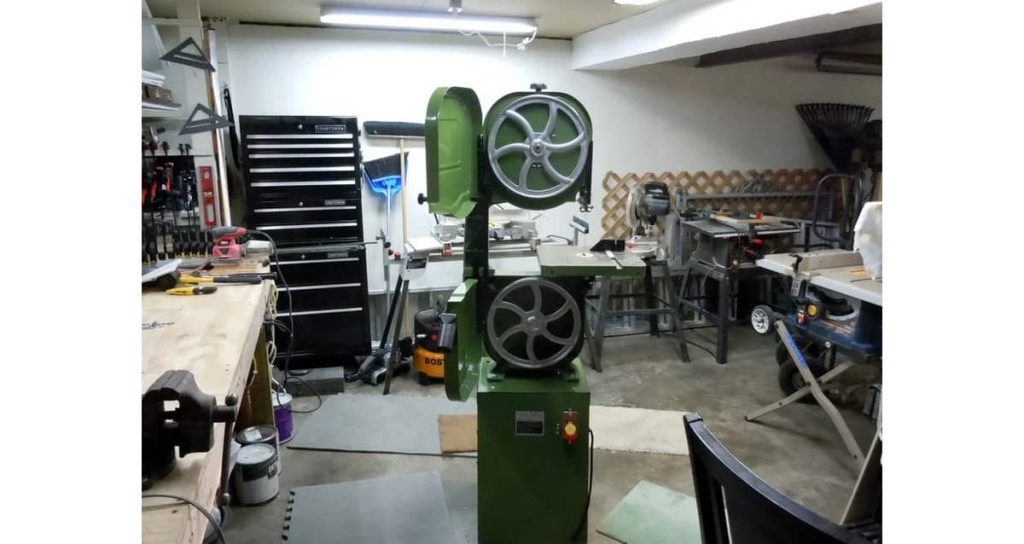
Before starting, disconnect the saw from power, open both wheel covers, and slightly reduce blade tension. The blade should remain installed but relaxed enough to prevent tension from influencing wheel position during the check.
Five-Minute Bandsaw Wheel Alignment Procedure
-
Rotate the upper wheel by hand until the blade rests near the center of the tire
-
Place a straightedge against the face of the upper wheel and extend it toward the lower wheel
-
Check whether the straightedge touches both wheels evenly
-
Use a flashlight behind the straightedge to make any spacing visible
Evaluating the Alignment Results
If the straightedge contacts both wheels at the same time, alignment is acceptable. If one wheel contacts first, the opposite wheel sits either forward or backward. Small gaps are often acceptable, while larger gaps may affect blade tracking and cutting accuracy.
Verifying Results by Rotating the Wheels
-
Rotate both wheels about 180 degrees
-
Repeat the straightedge check
-
Compare the measurements from each position
This step helps confirm that the reading reflects wheel position rather than tire shape or surface buildup.
What to Consider When Alignment Is Off
-
Upper wheel position is commonly adjusted using tracking or tilt controls
-
Lower wheel position may involve spacers or shims
-
Minor alignment differences may not require correction if blade tracking remains stable
If the saw continues to cut accurately and blade behavior stays predictable, immediate adjustments may not be needed.
Checking bandsaw wheel alignment does not require special tools or extended downtime. With a straightedge and a few minutes, users can identify a common source of tracking and cutting issues. Performing this check on a regular basis helps support blade condition, wheel performance, and reliable saw operation.