Choosing the right bandsaw blade can make the difference between a clean, precise cut and hours of frustration. The QSaw 601 M42 bandsaw blade has earned a reputation among metalworkers and fabricators for its ability to handle tough materials without losing its edge prematurely. This guide walks through everything from the blade’s construction to real application scenarios, giving you the practical information needed to decide if this blade fits your shop’s demands and how to get the most from it once installed.
Key Features of the QSaw 601 M42 Bandsaw Blade
The M42 designation refers to the high speed steel used in the tooth tips, which contains 8 percent cobalt for added heat resistance and hardness. Understanding the specific features helps explain why this blade performs the way it does.
- Bi-metal construction with a flexible spring steel backing and M42 high speed steel teeth
- Tooth hardness rating of approximately 67 to 69 HRC for extended wear resistance
- Available in multiple tooth pitch configurations to match material thickness
- Positive rake angle designed for aggressive cutting in ferrous metals
- Precision set teeth that reduce vibration and improve cut quality
- Compatible with most horizontal and vertical bandsaw machines
Why M42 High Speed Steel Matters for Metal Cutting
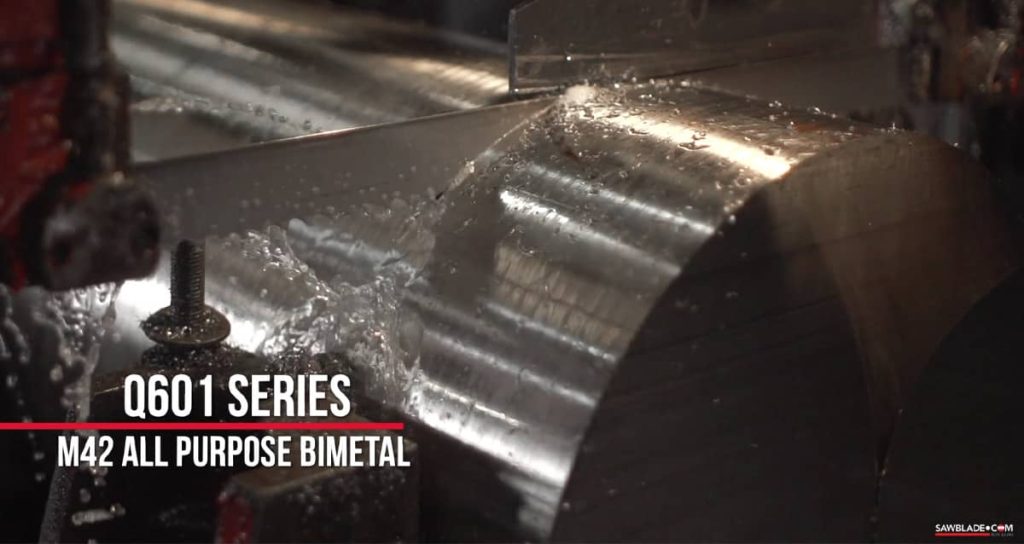
The cobalt content in M42 steel allows the blade to maintain its hardness at temperatures where standard bi-metal blades would soften and fail. When cutting stainless steel, tool steel, or other difficult alloys, friction generates significant heat at the tooth tip. A blade that loses its temper becomes dull rapidly, forcing you to slow feed rates or replace blades more frequently. The QSaw 601 M42 bandsaw blade handles these thermal demands, which translates to longer blade life and more consistent cutting performance across extended production runs.
Breaking In Your QSaw 601 M42 Bandsaw Blade Properly
New bi-metal blades require a break-in period that many operators skip, leading to premature tooth stripping and shortened blade life. During the first 50 to 100 square inches of cutting, reduce your normal feed pressure by about 50 percent while maintaining standard blade speed. This controlled wear rounds the microscopic burrs left from the manufacturing process and creates a slightly honed edge geometry that resists chipping. Rushing through break-in often results in losing teeth within the first few cuts, especially when working with abrasive materials or interrupted cuts like bundled tubing.
QSaw 601 M42 Bandsaw Blade Specifications at a Glance
| Specification | Details |
| Tooth Material | M42 High Speed Steel with 8% Cobalt |
| Backing Material | Fatigue Resistant Spring Steel |
| Tooth Hardness | 67 to 69 HRC |
| Backing Hardness | 48 to 50 HRC |
| Standard Widths | 1/2 inch to 2 inches |
| TPI Options | 4/6, 5/8, 6/10, 8/12, 10/14 Variable |
| Recommended Materials | Carbon Steel, Alloy Steel, Stainless Steel, Tool Steel |
| Maximum Cutting Speed | Up to 300 SFM depending on material |
Selecting the Right Tooth Pitch for Your Application
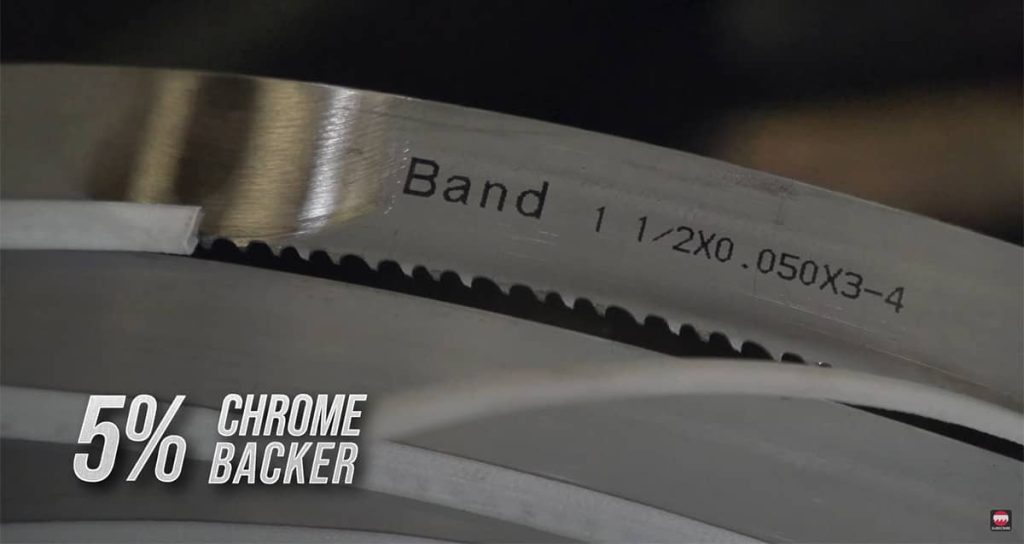
Tooth pitch selection depends primarily on the cross section of material being cut. The general rule requires at least three teeth engaged in the material at all times to prevent tooth stripping and maintain a smooth cut. For solid round stock measuring 2 inches in diameter, a 5/8 variable pitch works well for most carbon steels. When cutting thin wall tubing or sheet stacks, move to finer pitches like 10/14 to keep enough teeth engaged. Variable pitch patterns also reduce harmonic vibration, which produces a quieter cut and better surface finish compared to constant pitch blades.
Common Materials Suited for the QSaw 601 M42 Bandsaw Blade
This blade excels when cutting a specific range of metals that benefit from its heat resistance and hardness. The following materials represent typical applications where the M42 composition provides clear advantages.
- Mild steel structural shapes and solid bar stock
- 4140 and 4340 alloy steels in annealed or pre-hardened conditions
- 300 and 400 series stainless steels
- A2, D2, and O1 tool steels
- Inconel and other nickel based alloys at reduced speeds
- Hardened steels up to approximately 45 HRC
Setting Blade Tension and Tracking for Best Results
Proper tension directly affects cut accuracy and blade longevity. Most bandsaw manufacturers recommend tensioning bi-metal blades to 25,000 to 30,000 PSI, though your machine’s tension gauge may not read in these units. A reliable method involves tensioning until the blade deflects approximately 1/4 inch when pressed sideways at the midpoint between guides, then increasing slightly for wider blades cutting thick stock. Tracking adjustments should position the blade so the tooth gullets ride just off the wheel crown. Check tension after the first few minutes of operation, as new blades stretch slightly during initial use.
Troubleshooting Common Cutting Problems
Even quality blades encounter issues when conditions fall outside normal parameters. Recognizing symptoms helps identify the root cause quickly.
- Teeth stripping usually indicates excessive feed pressure, insufficient blade tension, or too few teeth engaged in the material
- Premature dulling often results from inadequate coolant flow, excessive blade speed, or cutting work hardening materials without proper technique
- Wandering cuts suggest worn guides, insufficient tension, or a blade that has developed a permanent set from heat damage
- Excessive vibration points to incorrect tooth pitch for the material thickness or blade tracking problems
- Rough surface finish typically relates to feed rate being too high or using a coarse pitch on thin material
ALSO WORTH READING
Struggling with Blade Drift on Your Bandsaw?
If you own a Central Machinery 14″ bandsaw, you know that getting clean, straight cuts depends on proper blade alignment. I put together a detailed guide on improving accuracy and blade tracking for this specific model. It covers everything from tensioning adjustments to common issues that cause the blade to wander. Check it out if you want to get better results from your saw.
Maximizing Blade Life Through Proper Coolant Use
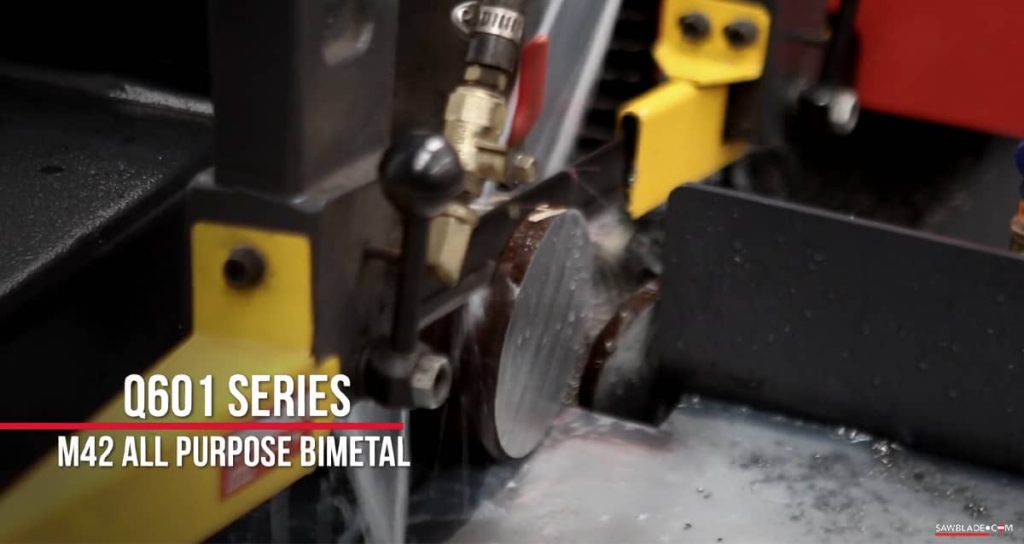
Flood coolant serves two purposes during band sawing: removing heat from the cut zone and flushing chips from the tooth gullets. The QSaw 601 M42 bandsaw blade performs best with a properly mixed soluble oil or semi-synthetic coolant at concentrations between 5 and 10 percent. Direct the coolant stream at the point where teeth enter the material, not randomly across the blade. Many shops underestimate coolant volume, but increasing flow rate often extends blade life significantly more than upgrading to premium blade models. Check coolant concentration weekly with a refractometer, as water evaporation gradually weakens the mixture and reduces both cooling and lubrication effectiveness.
How the QSaw 601 M42 Compares to Standard Bi-Metal Blades
Standard bi-metal blades typically use M42’s cousin, M51, or lower cobalt formulations that cost less but sacrifice some heat resistance. For shops cutting primarily mild steel and aluminum, these economy blades often provide acceptable service life. However, when your work involves stainless steel, tool steels, or high production volumes, the QSaw 601 M42 bandsaw blade’s superior hot hardness translates to measurable cost savings per cut. The blade holds its edge through more linear feet of material, reduces downtime for blade changes, and delivers more consistent cut quality from first piece to last.
- Standard bi-metal blades typically contain 3 to 5 percent cobalt versus 8 percent in M42
- Heat resistance in M42 allows higher cutting speeds on tough alloys
- Initial blade cost runs higher, but cost per cut often favors M42 in demanding applications
- Tooth tip retention improves noticeably when cutting abrasive or work hardening materials
- Break-in requirements are similar, though M42 benefits more from proper conditioning
Getting the Most from Your Bandsaw Blade Investment
Selecting the right bandsaw blade represents just one part of achieving efficient metal cutting. Pairing a quality blade like the QSaw 601 M42 with proper machine setup, correct cutting parameters, and consistent maintenance practices produces results that neither component delivers alone. Take time to verify blade tension, track alignment, and guide condition before each production run. Monitor coolant quality and flow throughout operation. Keep records of blade life under different conditions to identify opportunities for improvement. When your equipment, blade selection, and technique work together, you spend less time fighting the material and more time producing finished parts.