When Your Saw Sees a Different Material Every Hour
Most fabrication shops don’t have the luxury of cutting one material all day. A typical shift might start with mild steel tube, move into stainless flat bar, then finish with alloy rounds or a bundle of structural profiles. The saw has to keep up with all of it, and so does the blade.
This is where a lot of shops run into trouble. They choose a blade based on what they cut most often, then push it through everything else and wonder why performance drops off. The reality is that mixed-material cutting puts a specific set of demands on a blade, and not every bi-metal option is built to meet them. The right choice isn’t necessarily the most expensive blade or the most aggressive one. It’s the blade that stays reliable when the material in the vise keeps changing.
The Specific Challenges That Mixed Cutting Creates
Cutting a single material repeatedly is straightforward once the setup is dialed in. Mixed cutting is different because each material change introduces new variables that affect how the blade behaves.
Mild steel is forgiving. Stainless work-hardens quickly if heat builds up during the cut. Alloy steel resists the tooth more than carbon steel does. Structural shapes like angle iron and channel create interrupted cuts that put uneven stress on the teeth. Thin-wall tubing needs a different tooth engagement than solid bar does. When a blade has to handle all of this across a single workday, its construction and tooth geometry matter far more than they would in a single-material environment.
Common issues that signal a blade isn’t suited for mixed cutting include:
- Edge wear that accelerates sharply when moving to harder materials
- Cut drift that appears even with correct tension and guide settings
- Vibration and chatter on structural profiles
- Chips that come out powdery or show heat discoloration
- Rough or torn cut surfaces on materials that should finish cleanly
- Blade entry grabbing on thin-wall tubing
- Stainless glazing mid-cut due to work hardening
Why Bi-Metal Construction Is the Practical Starting Point
For shops cutting a range of common metals, bi-metal blade construction offers a balance that neither carbon steel nor carbide typically matches for everyday use. Carbon steel blades are economical but wear too quickly on harder or more abrasive materials. Carbide blades perform exceptionally on demanding stock but carry a cost and setup requirement that doesn’t make sense for general shop work.
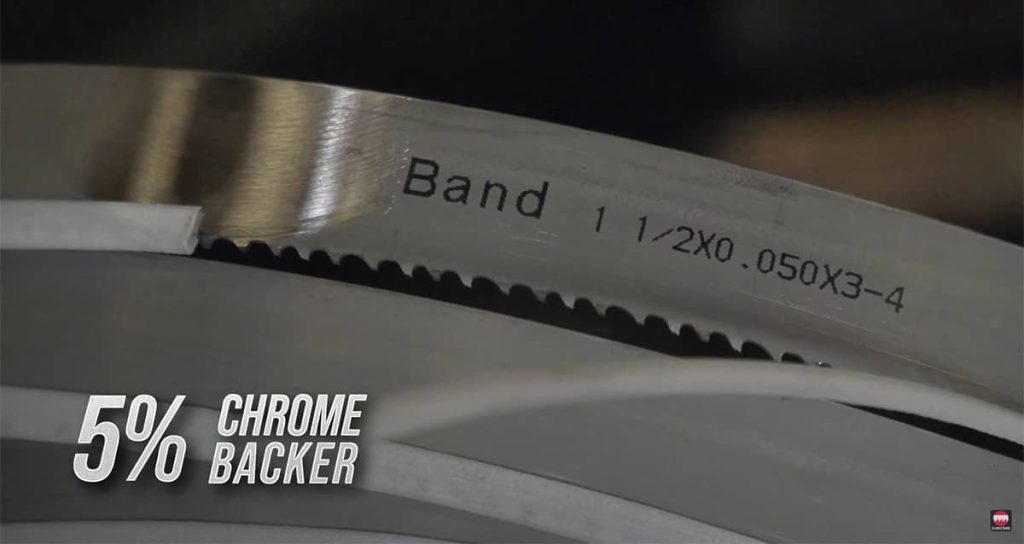
Bi-metal blades sit in the middle. A high-speed steel tooth edge is welded to a flexible spring steel backer, giving the blade both cutting performance on harder metals and the mechanical toughness to handle continuous bending around the saw wheels. For shops where the material mix changes regularly, this combination tends to deliver better cost per cut than either of the alternatives.
What Makes the QSaw 601 M42 Worth Considering
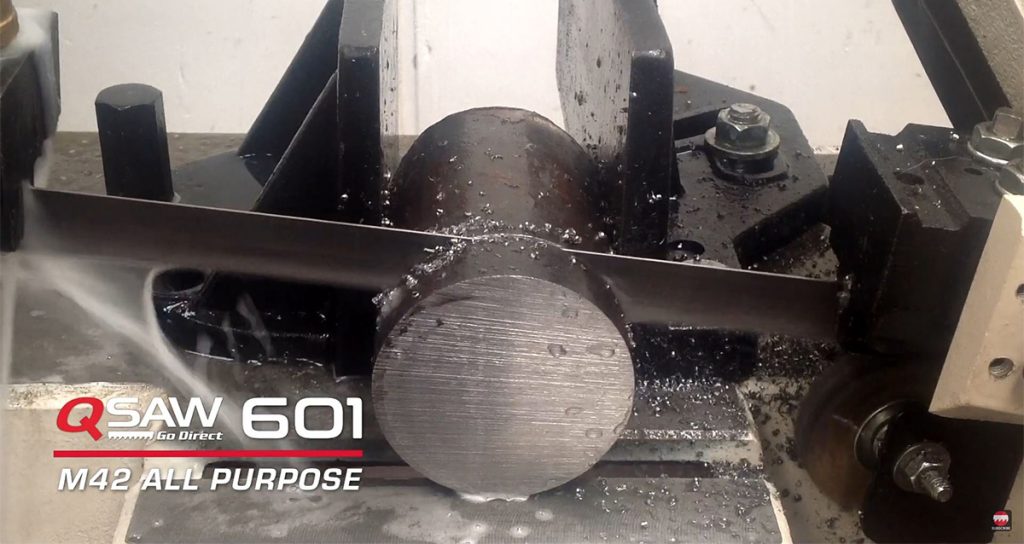
The QSaw 601 M42 bi-metal bandsaw blade is built specifically for the kind of general-purpose metal cutting that mixed-material shops deal with every day. The M42 cobalt high-speed steel tooth edge gives it better heat and wear resistance than standard M2 blades, which becomes important when cutting conditions shift between mild steel, stainless, and alloy stock within the same shift.
The flexible alloy backer helps the blade handle the mechanical demands of daily shop use, including interrupted cuts on structural shapes, varying feed pressure between operators, and the continuous bending stress of running on the saw wheels. With proper tooth pitch selection, the right blade speed, and consistent coolant use, the QSaw 601 can move through mild steel solids, stainless tubing, alloy rounds, pipe, and light structural profiles without needing to be swapped between jobs.
Blade Selection by Material and Cut Type
| Cutting Situation | Key Blade Feature | What It Does |
|---|---|---|
| Mild steel solids | M42 bi-metal tooth edge | Reliable edge life at a reasonable blade cost |
| Stainless tubing | Controlled pitch with coolant | Limits heat and resists work hardening |
| Alloy steel rounds | Cobalt-grade tooth construction | Maintains edge under harder cutting conditions |
| Structural profiles | Variable tooth pattern | Reduces vibration and uneven tooth engagement |
| Bundled stock | Sufficient gullet capacity | Allows chips to clear through the cut |
| Thin-wall tubing | Higher tooth count | Prevents grabbing and rough entry |
| Thick solid bar | Lower tooth count | Gives chips room to form and exit cleanly |
| General shop mix | All-purpose bi-metal construction | Reduces blade changes across different jobs |
Why the Cobalt Tooth Edge Matters in Practice
M42 cobalt high-speed steel is a specific alloy grade that contains a higher cobalt percentage than standard M2. That cobalt content raises the material’s ability to hold its hardness at elevated temperatures, which is referred to as red hardness in cutting tool terminology.
For mixed-material shops, this property has a practical effect. When the blade moves from a mild steel cut to stainless or alloy steel, the thermal load on the tooth edge increases. A standard blade loses its edge faster under those conditions. A cobalt tooth edge tolerates the additional heat better and maintains its cutting geometry longer, which means more usable cuts before the blade needs to be replaced. This doesn’t eliminate the need for correct setup habits, but it gives the blade a wider operating range when conditions change.
Get the Blade Your Shop Actually Needs at SawBlade.com
Good cutting starts with the right blade. Whether you’re working through mild steel, stainless, alloy stock, or a mix of all three, SawBlade.com has bi-metal bandsaw blade options built for the way your shop actually operates. Head over and find the blade that fits your material, your machine, and your production demands.
Tooth Pitch and Why Getting It Right Matters
Blade construction determines what a bi-metal blade is capable of. Tooth pitch determines whether it actually performs well on the material in front of it. These two factors work together, and overlooking pitch is one of the most common reasons a good blade underperforms.
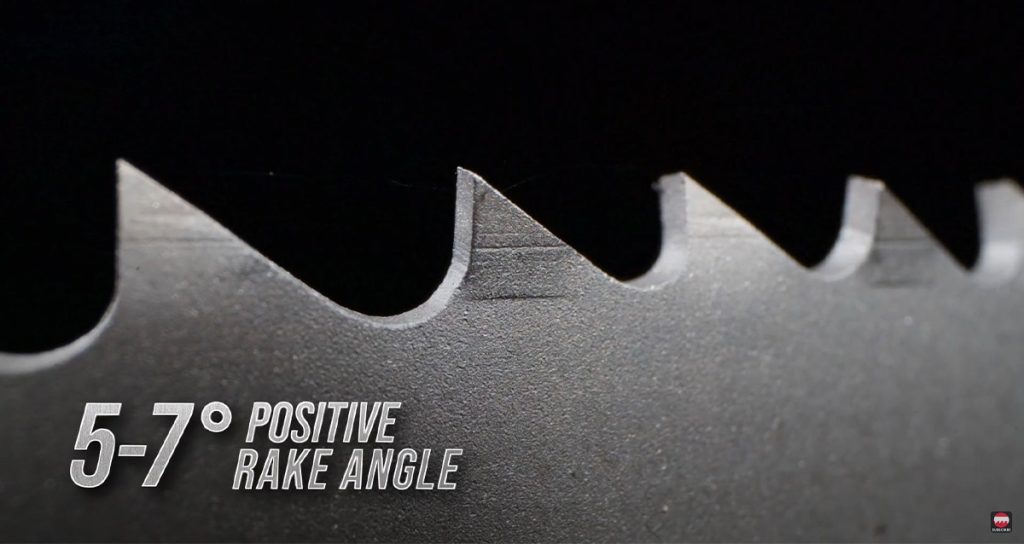
Pitch controls how many teeth are in contact with the material at any moment and how much space the gullets have to carry chips out of the cut. Too few teeth on thin-wall tubing and the blade grabs. Too many teeth on thick solid bar and chips pack into the gullets, generating heat and slowing the cut.
For shops cutting a wide range of cross-sections, variable pitch blades are often the better choice over fixed pitch. Variable pitch reduces vibration on structural profiles and handles transitions between light and heavy stock more smoothly. A good starting point is to select pitch based on the thinnest and thickest material you cut most regularly, then adjust based on chip formation as you go.
Setup Habits That Keep the Blade Performing
A quality bi-metal blade still depends on consistent setup and operation to deliver its full service life. A few habits make a measurable difference:
- Run a new blade at reduced feed pressure for the first several cuts to allow the teeth to seat properly
- Use coolant consistently on steel, stainless, and alloy cuts rather than applying it selectively
- Reduce blade speed when moving from mild steel to harder or more heat-sensitive materials
- Monitor chip shape and color during the first inches of each cut as an early indicator of blade health
- Set guides as close to the workpiece as the job allows for better blade support
- Avoid pushing feed rate on stainless or alloy stock and let the blade work at its own pace
- Keep the vise and cutting area clear of chips between jobs
The Cost Per Cut Calculation
Blade price is the figure that shows up on the invoice, but it’s not the right number to focus on when evaluating blade performance. Cost per cut, meaning the total number of usable cuts a blade delivers relative to its purchase price, is a more accurate measure of value.
A lower-cost blade that dulls quickly on harder materials, produces inconsistent cuts across different stock, or requires frequent replacement often costs more over time than a better-quality blade used across the same volume of work. For mixed-material shops specifically, the additional cost of a cobalt bi-metal blade tends to pay back through longer blade life, fewer changeovers, and more predictable cutting across a wider range of materials. The QSaw 601 is designed with this kind of practical value in mind.
Your Setup Is Written in Your Chips
Every cut leaves behind evidence. Curled silver chips mean things are running right. Powdery dust or blue discoloration means heat is building and something needs to be adjusted. Learning to read that feedback takes minutes and can save you from premature blade wear, poor cut quality, and wasted time troubleshooting. Our article Reading Cutting Chips: What They Reveal About Your Sawing Setup gives you the full picture.
Situations Where a Specialized Blade Makes More Sense
The QSaw 601 and similar general-purpose bi-metal blades are well suited for most mixed-material shop environments, but there are cases where a more specialized option is the better call:
- The shop cuts hardened tool steel or highly abrasive alloys through most of the day
- Production volume on a single repeated material justifies a blade optimized for that specific stock
- Carbide performance is needed for very hard or abrasive material that wears standard bi-metal too quickly
- The current bi-metal blade is failing consistently despite correct speed, feed, coolant, and pitch selection
- Large stainless or alloy solids are being cut in production quantities that push beyond general-purpose blade capacity
Outside of those scenarios, a well-chosen bi-metal blade covers most of what fabrication and maintenance shops need on a daily basis.
A Blade That Works Across the Week, Not Just One Cut
For shops where the material in the vise changes throughout the day, the goal isn’t finding a blade that sets records on any one specific cut. It’s finding a blade that works reliably across the full range of what the shop actually cuts, week after week.
The QSaw 601 M42 bi-metal bandsaw blade is designed for that role. Its cobalt tooth edge handles heat and wear across a range of common metals. Its flexible backer holds up to daily mechanical stress. Its general-purpose cutting behavior reduces the need for frequent blade changes when the material mix shifts. With the right tooth pitch, consistent coolant, and appropriate speed settings, it gives mixed-material shops a dependable blade that fits the way they actually work.