Why Blade Tension Matters More Than Most Operators Realize
When band saw operators struggle with inconsistent cuts or premature blade failure, they often blame the blade itself or the material being cut. In many cases, however, the real culprit is improper blade tension. The relationship between blade tension and cutting performance is direct and measurable. A blade that runs too loose will wander through the cut, producing wavy edges and inaccurate dimensions. A blade stretched too tight will fatigue quickly, leading to cracks and unexpected breakage. Finding the right tension setting creates the foundation for every successful cut, and understanding this relationship can transform both your results and your operating costs.
Common Signs That Your Blade Tension Needs Adjustment
- Cuts that drift to one side despite proper guide alignment
- Wavy or barrel shaped cuts on thicker stock
- Unusual vibration or fluttering sound during operation
- Blade slipping off the wheels during cutting
- Premature blade breakage, especially at the weld
- Excessive blade wear concentrated on one side of the teeth
- Difficulty following curved layout lines on scroll work
- Burn marks on the material indicating blade binding
How Blade Tension Directly Affects Cut Accuracy
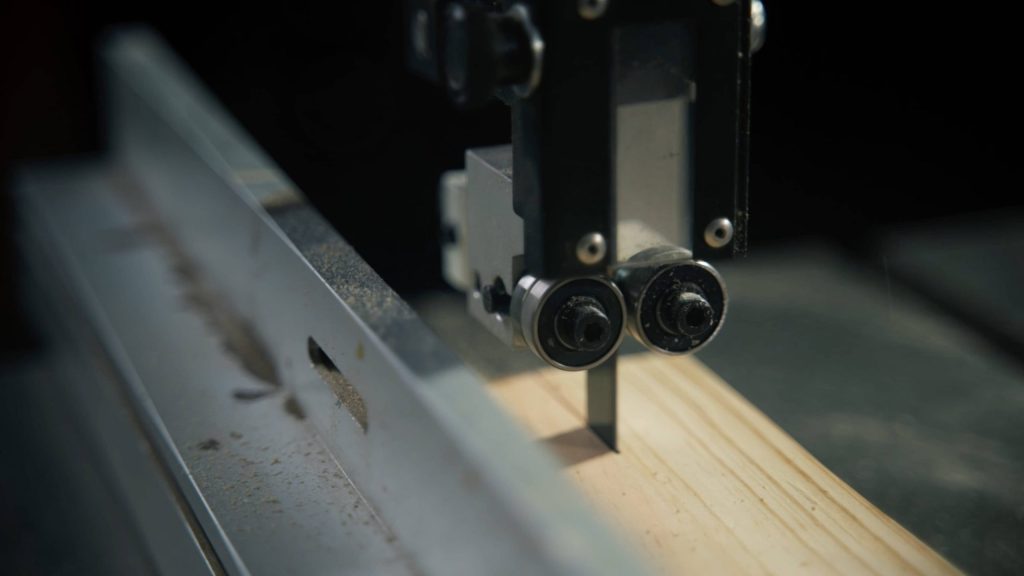
Proper blade tension keeps the cutting edge stable as it moves through the workpiece. When tension falls below the recommended level, the blade lacks the rigidity needed to resist the lateral forces generated during cutting. This causes the blade to deflect away from the intended cut line, particularly when cutting dense materials or making resawing cuts through wide stock. A blade tensioned to manufacturer specifications maintains a straight tracking path, allowing operators to achieve tolerances within a few thousandths of an inch on precision work. The difference between a properly tensioned blade and an under tensioned one often shows up immediately in the form of cleaner glue surfaces and parts that fit together without additional milling.
The Science Behind Blade Tension and Stability
Band saw blades function on a principle similar to a guitar string. When a string is tuned to the correct pitch, it vibrates in a controlled, predictable pattern. When the same string is too loose, it produces an unstable, buzzing sound because it lacks the tension needed to maintain its position. Band saw blades behave the same way. Proper tension creates what engineers call beam strength, which is the blade’s ability to resist bending forces perpendicular to its length. This beam strength increases proportionally with tension up to a certain point. Beyond that point, the steel begins to stretch permanently, weakening the blade structure. Most blade manufacturers recommend tension settings between 15,000 and 25,000 PSI depending on blade width and material composition.
Recommended Blade Tension Settings by Blade Width
| Blade Width | Recommended Tension (PSI) | Typical Applications |
| 1/8 inch | 10,000 to 12,000 | Tight radius scrollwork and intricate patterns |
| 1/4 inch | 12,000 to 15,000 | General curves and light resawing |
| 3/8 inch | 15,000 to 18,000 | Medium curves and moderate stock thickness |
| 1/2 inch | 15,000 to 20,000 | Straight cuts and medium resawing |
| 3/4 inch | 20,000 to 25,000 | Heavy resawing and thick hardwoods |
| 1 inch | 25,000 to 30,000 | Production resawing and maximum beam strength |
Why Under Tensioned Blades Wear Out Faster
A blade running with insufficient tension experiences a phenomenon called blade bounce. As the blade contacts the workpiece, it deflects backward, then springs forward again. This repeated flexing creates stress cycles that accumulate at the blade’s weakest points, typically at the weld joint and in the tooth gullets. Under normal conditions, a quality blade might last through hundreds of hours of cutting. When that same blade runs under tensioned, those stress cycles multiply dramatically. The constant flexing also generates heat through internal friction within the steel itself. This heat buildup softens the tooth tips and accelerates wear, sometimes reducing blade life by half or more compared to the same blade running at proper tension.
Keep Your Bandsaw Setup Working Properly
When blade tension is set correctly, the saw runs smoother, cuts straighter, and puts less strain on the blade. If readers notice drifting cuts, worn teeth, or inconsistent performance, it may also be time to review the blade and related components. For replacement blades, guide parts, and cutting supplies, they can visit sawblade.com.
Benefits of Maintaining Correct Blade Tension
- Straighter cuts with less drift, reducing material waste
- Extended blade life through reduced stress cycling
- Lower operating costs from fewer blade replacements
- Improved surface finish requiring less secondary processing
- More predictable performance across different materials
- Reduced vibration leading to quieter operation
- Better tracking stability over extended production runs
- Greater operator confidence when making precision cuts
How Over Tensioning Damages Blades and Machines
While under tensioning causes most blade performance problems, over tensioning creates its own set of issues. Excessive tension stretches the blade beyond its elastic limit, causing permanent elongation in the center of the band. This stretched section no longer tracks properly on the wheels, creating a condition called dishing where the blade cups rather than running flat. Over tensioned blades also place unnecessary stress on wheel bearings, guide assemblies, and the tension mechanism itself. Some operators crank up the tension thinking it will improve cut quality, but this approach actually shortens blade life and can damage expensive machine components. The cost of replacing worn bearings far exceeds the time saved by checking tension properly.
ALSO WORTH READING
More Resources for Delta Bandsaw Owners
If you own a Delta 28-243 or are considering picking one up, we have a dedicated guide that covers everything you need to know about this popular bandsaw. You will find details on the manual, correct blade sizes, replacement parts, and solutions to the most common issues owners run into. It is a handy reference whether you are setting up your saw for the first time or troubleshooting a problem.
Steps for Setting Blade Tension Correctly
- Consult the blade manufacturer’s specifications for the recommended tension range
- Use a blade tension gauge for accurate measurement rather than relying on built in indicators
- Apply tension gradually while watching the blade tracking on the wheels
- Check that the blade runs in the center of the wheel crowns before making test cuts
- Make a test cut in scrap material similar to your production stock
- Observe the cut quality and adjust tension in small increments if needed
- Recheck tension after the first 15 minutes of operation as new blades may stretch slightly
- Document your final settings for future reference when changing blades
Understanding Tension Gauges and Built In Indicators
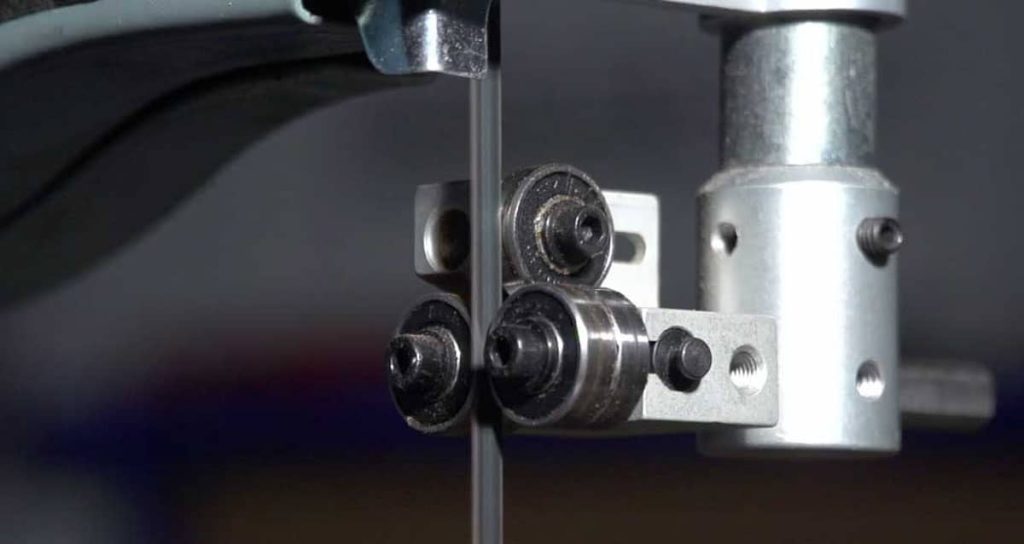
Most band saws include a tension scale on the machine, but these indicators serve only as rough starting points. Factory scales often read inaccurately after years of use, and they cannot account for variations in blade thickness or metallurgy. A dedicated blade tension gauge provides readings in actual PSI, giving operators the precision needed for consistent results. These gauges work by measuring blade deflection under a known load, then converting that measurement to tension values. Professional shops that depend on accurate cuts typically invest in quality tension gauges and check their readings against blade manufacturer recommendations. The small investment in proper measurement tools pays back quickly through improved cut quality and longer blade life.
Maintenance Habits That Support Proper Blade Tension
- Release tension completely when the saw will sit idle for extended periods
- Inspect wheels for buildup of sawdust or pitch that affects blade tracking
- Check guide bearings and blocks for wear that allows blade deflection
- Clean the blade regularly to prevent resin accumulation
- Monitor blade condition and replace before excessive wear affects performance
- Keep records of blade tension settings that work well for specific applications
- Verify tension gauge accuracy periodically using a calibration standard
- Train all operators on proper tensioning procedures for consistency
Making Blade Tension Part of Your Regular Workflow
Experienced operators check blade tension at the start of each work session and again when switching between different materials or cut types. This habit takes less than a minute but prevents hours of frustration from poor cut quality or unexpected blade failure. When proper blade tension becomes routine, operators develop an intuitive sense for how the saw should sound and feel during operation. Any deviation from normal becomes immediately noticeable, allowing quick correction before problems affect production quality. Shops that prioritize blade tension as part of their standard operating procedures consistently report better results, lower consumable costs, and fewer interruptions to their workflow.