Why Your Guide System Influences Curve-Cutting Performance
Cutting curves puts extra demands on a bandsaw, especially when shaping templates, instrument bodies, decorative layouts, or tight-radius craft pieces. The blade must remain steady throughout the turn, and the guide system is a major factor in whether the cut stays smooth or begins to drift. Upgrading the guides is one of the most effective ways to gain better control and more predictable results.
Challenges You’ll Face When Cutting Tight Curves
-
Narrow blades flex more easily and need steady lateral support
-
Heat builds quickly on thin blades due to friction
-
Guides positioned too far forward cause binding
-
Poorly aligned lower guides create chatter
-
Factory blocks often have trouble keeping narrow blades on track
How Curve Cutting Impacts Bandsaw Guides
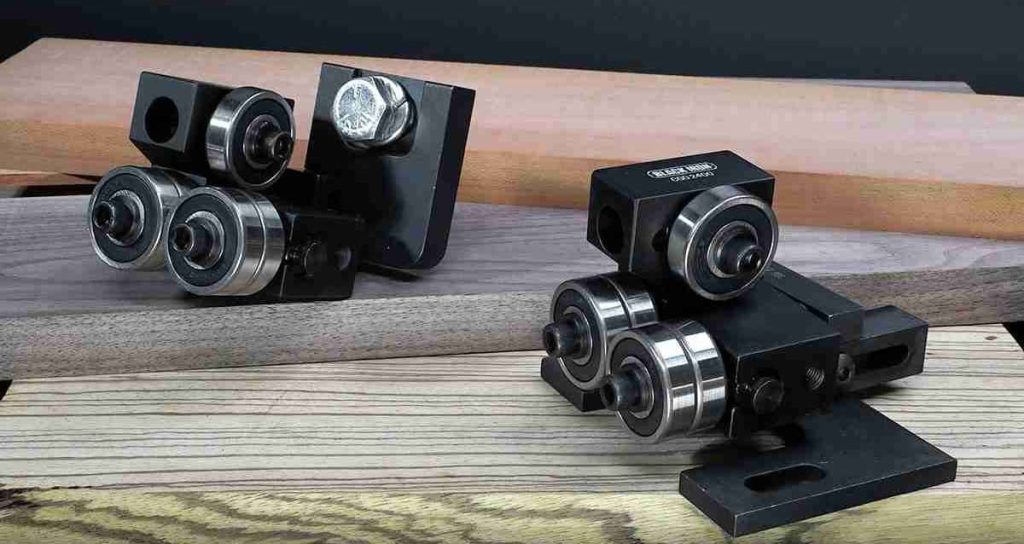
Curve work exposes alignment issues right away. Slim blades bend with minimal pressure, so even small misalignment changes the direction of the cut. Block-style guides generate extra heat, which leads to drift, while lower guide instability increases vibration. Without a roller-bearing upgrade, cutting smooth, consistent curves becomes far more difficult.
Why Roller-Bearing Guides Improve Blade Control on Curves
Roller-bearing guides reduce side drag, run cooler, and provide better support than stock blocks. By lowering friction and limiting heat, they help the blade stay centered during tight turns. This stability allows you to follow patterns accurately without dealing with sudden wandering.
Recommended Guide Kit Based on Curve Radius & Blade Width
| Curve Radius | Blade Width | Recommended Guide Type |
|---|---|---|
| Under 1″ | 1/8″ | Narrow-blade optimized kit |
| 1″–2″ | 1/8″–3/16″ | Standard roller-bearing kit |
| 2″–4″ | 3/16″–1/4″ | Standard or heavy-duty kit |
| Over 4″ | 1/4″–3/8″ | Heavy-duty or standard kit |
Why SawBlade.com Guide Kits Perform Well for Curved Cuts
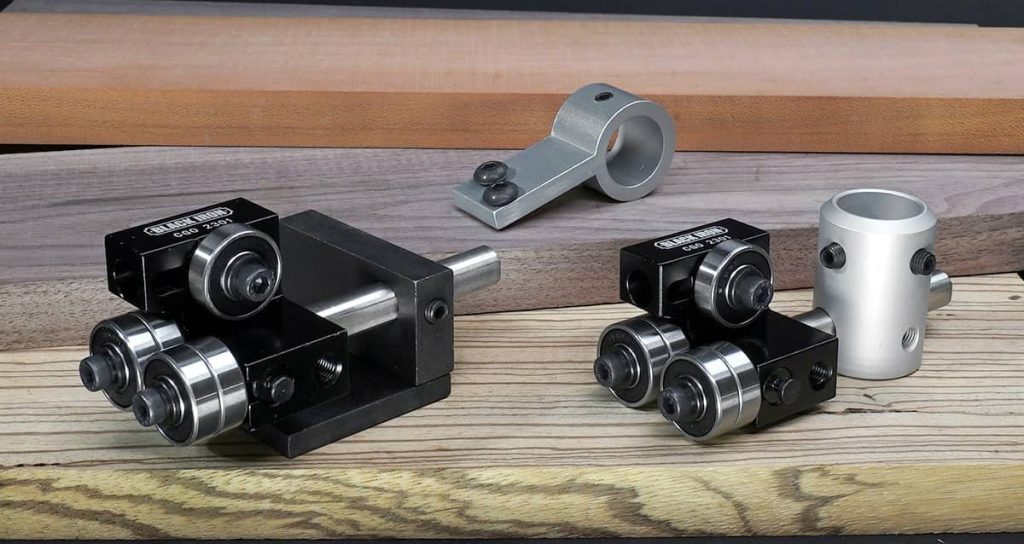
SawBlade.com guide kits use secure brackets and sealed bearings designed to hold alignment during cutting. This ensures that narrow blades stay supported from both sides while running cool. The result is smoother curve transitions with far less drift.
Benefits You’ll See With SawBlade.com Guide Kits
-
Bearings rotate smoothly instead of rubbing
-
Reliable left-and-right blade support
-
Light thrust contact during cutting
-
Strong brackets that resist shifting
-
Suitable for narrow blade sizes
-
Improved lower guide stability
Standard Roller-Bearing Kits for Most Curve Work
Standard roller-bearing kits work well for general curved cutting using 1/8″–3/8″ blades. They maintain better tracking, run cooler, and support woodworking patterns, cabinetry outlines, instrument shapes, and craft templates with good consistency.
Why Standard Kits Are a Practical Option
-
Simple side-bearing adjustment
-
Cooler blade operation
-
Reliable lower guide positioning
-
Works well with several blade widths
Narrow-Blade Kits for Tight or Detailed Curves
For very small-radius cuts, narrow-blade optimized kits are designed to stabilize blades down to 1/8″. These kits are ideal when precision and clean turns are essential.
What Makes Narrow-Blade Kits Useful
-
Compact side bearings
-
Fine-tuned adjustment capability
-
Stable support for very thin blades
-
Ideal for scroll-like curves and intricate shapes
Heavy-Duty Kits for Medium-Radius Cuts
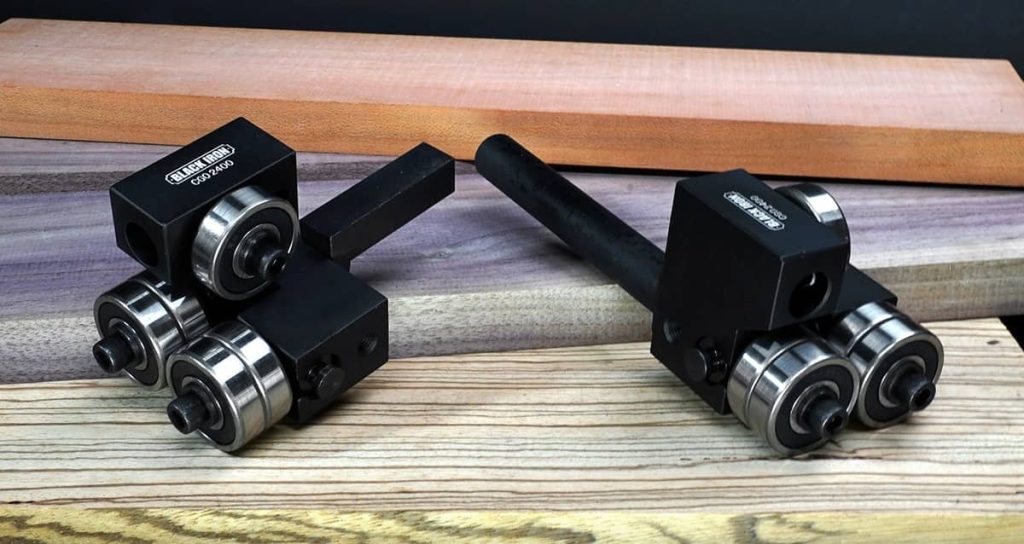
Heavy-duty guide kits feature larger bearings and stronger brackets to support wider blades through medium curves. They perform well on guitars, chair legs, large templates, or thick hardwoods where the blade needs extra rigidity.
Looking for More Bandsaw Upgrade Advice?
For additional help choosing the right setup for your saw, visit our in-depth guide, “Upgrade Guide Options for Central Machinery 14″ Band Saws: What to Know Before You Buy.” It outlines compatible guide systems, key features to compare, and what to consider before selecting an upgrade, making it a useful next step for improving your machine’s performance.
When Heavy-Duty Kits Are the Best Choice
-
Using 1/4″–1/2″ blades
-
Cutting moderate-radius curves
-
Moving through dense hardwoods
-
Performing repeated pattern cuts
Upgrading the guide system on your bandsaw can significantly improve curve-cutting quality. Standard roller-bearing kits handle most cutting needs, narrow-blade kits excel with tight curves, and heavy-duty kits offer better stability for wider blades. Choosing the guide style that fits your blade size and typical cutting radius helps you achieve smoother curves, better tracking, and more consistent results across all your projects.