Why Getting the Blade Wrong Costs More Than Just the Blade
If your saw runs carbon steel one hour and stainless pipe the next, every blade decision carries a real cost. The wrong choice doesn’t just wear out sooner; it drags down feed rates, pushes scrap numbers up from cuts that drift off square, and introduces blade changes that break production momentum. A bi-metal bandsaw blade selected for daily mixed-material work stays sharp through a wide range of ferrous alloys, keeps cuts accurate across changing cross-sections, and holds cost per cut to a minimum regardless of what comes off the material rack next. The two M42 bi-metal blades covered here address that need directly, and between them they handle the full scope of what fabrication shops, service centers, and machine shops put through a bandsaw on any given day.
What Goes on the Material List in a Mixed-Metal Shop
Before selecting a bi-metal bandsaw blade, it helps to map out every material the saw is expected to handle:
- Carbon steel bar and tube
- Alloy steel and chrome steel
- Stainless steel solid sections and pipe
- Die steel and tool steels
- Nickel-based alloys
- Structural steel sections including beams, channel, and angle iron
- Heavy-wall and thin-wall tubing
- Bundled sections cut simultaneously
Why Bi-Metal Construction Is the Right Starting Point for Variable Material Work
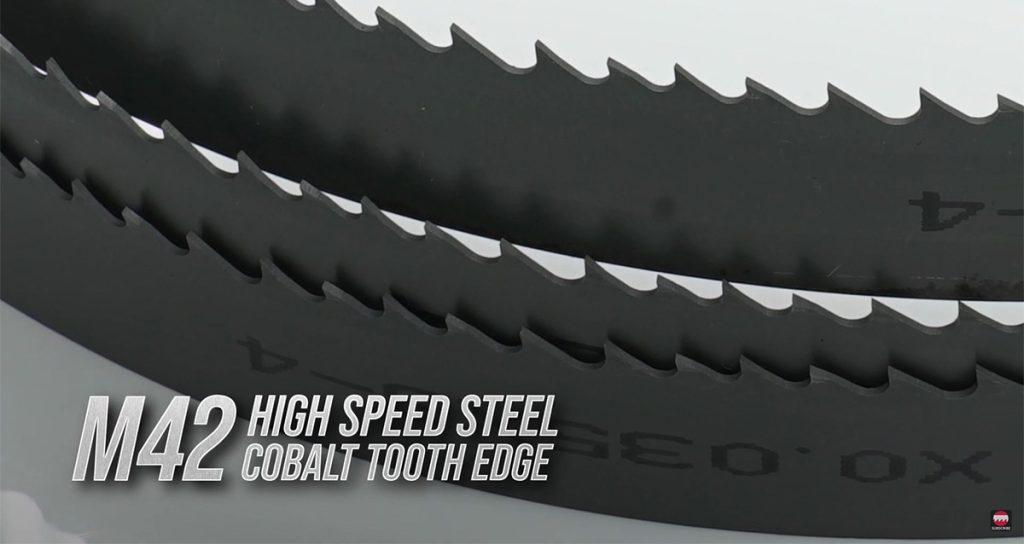
A bi-metal bandsaw blade joins two materials through electronic welding: a high-speed steel tooth edge attached to a flexible alloy steel backer. The tooth edge, typically M42 cobalt high-speed steel, carries the hardness required to work through heat-resistant alloys and grades that work-harden under the blade without losing the edge before the cut is finished. The backer handles the flex, shock, and vibration that would split a single-material blade, particularly when the blade enters and exits walls on hollow profiles or structural sections. When material grades rotate throughout the shift, this construction keeps one blade effective across more jobs, holds dimensional accuracy through cross-section changes, and resists the heat that accumulates during sustained runs on stainless or alloy steel. Against carbon blades, the cost per cut is lower and the usable material range is broader without any blade change between grades.
The Qsaw601 M42: Built to Stay on the Machine Across Every Steel Grade
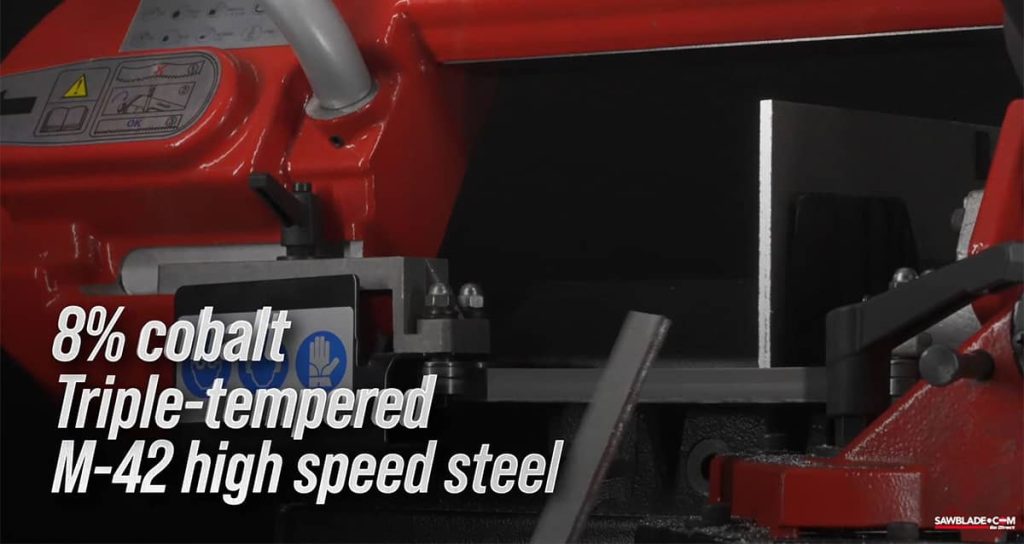
The Qsaw601 M42 is an all-purpose bi-metal bandsaw blade developed for shops that require one blade to cover carbon steel, stainless, chrome, die steel, alloy steel, nickel-based alloys, and pipe without pulling the blade between jobs. Its 5-7° positive rake angle drives each tooth into the workpiece rather than scraping across it, which cuts heat output per tooth engagement, accelerates chip removal, and lengthens the interval before the edge needs replacing. The ground tooth form holds tighter height and profile tolerances than milled teeth, which produces cleaner cuts, lowers vibration through the cut, and keeps the wear pattern predictable across long production runs. The M42 cobalt edge stays functional at temperatures that degrade standard carbon teeth rapidly, which makes it the sensible choice for the harder grades (stainless, chrome steel, nickel-based alloys) that load the most heat into the tooth. Every blade is custom welded to length, width, and TPI, and the alternating left/right tooth set pattern controls chatter as the blade moves between solid and hollow profiles.
Qsaw601 M42 Specifications at a Glance
| Feature | Detail |
|---|---|
| Tooth material | M42 cobalt high-speed steel |
| Backing material | Fatigue-resistant alloy steel |
| Tooth design | Ground tooth form, 5-7° positive rake |
| Welding method | Electronic welding |
| Tooth set pattern | Alternating left/right for reduced chatter |
| Machine compatibility | Horizontal and vertical machines |
| Best for | Carbon steel, stainless, chrome, alloy, die steel, nickel alloys, pipe and tube |
How the Qsaw601 M42 Fits Into Day-to-Day Production
The Qsaw601 is designed to stay loaded through multiple jobs, and it earns that in several production contexts. Steel service centers handling mixed orders across solid bar, tube, and plate formats get stable cutting rates without needing to swap blade geometry between material grades. Fabrication shops cutting stainless next to mild steel find that the M42 edge manages the heat stainless generates without the premature breakdown that limits standard bi-metal blades on that grade. Tool and die shops get the precision the ground tooth form delivers on closer tolerance requirements. Machine shops running horizontal and vertical saws simultaneously can run one blade specification across both without adjustment. Across all of these contexts, the Qsaw601 narrows the number of blade types in inventory while keeping cut quality consistent across every application it handles.
Jobs Where the Qsaw601 M42 Performs Reliably
- High-volume carbon steel bar and tube on horizontal production saws
- Stainless steel sections and pipe in fabrication and process piping shops
- Mixed alloy orders at steel service centers with frequent grade changes
- Die steel and tool steel cutting in tool and die or mold shops
- Nickel-based alloy sections in industrial manufacturing environments
- Contour cutting and general-purpose work on vertical band saws
The Qsaw501 IC: Designed for Structural Steel and the Problems Interrupted Cuts Create
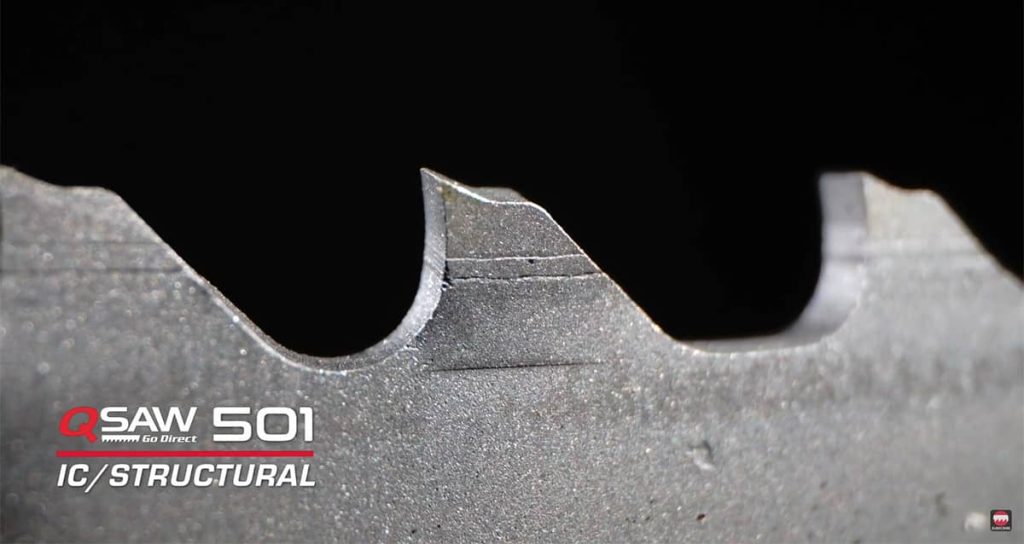
Where the Qsaw601 addresses material range, the Qsaw501 IC addresses structural geometry. Every time a blade passes through an I-beam, channel, angle iron, or hollow section, it enters and exits walls and flanges repeatedly within a single cut. Each of those transitions is an impact event, and conventional teeth absorb those loads at individual tips until chipping becomes progressive and blade life drops sharply on structural work. The Qsaw501 IC’s wide-set IC (Interrupted Cut) tooth design redistributes those impact loads across the tooth set rather than concentrating them at the tip of each tooth, and the profile prevents the over-feeding that strips teeth when operators push feed rates through heavy cross-sections. Manufacturing heat treatment removes the break-in requirement that standard bi-metal blades carry, which means the Qsaw501 IC reaches full production feed rate from the opening cut. For shops rotating blades regularly, that saves measurable time over weeks of production. The 5/7 and 8/11 TPI options are configured for structural steel requirements and cover both the heavier profiles and lighter-walled sections within the same blade line.
Jobs Where the Qsaw501 IC Performs Reliably
- Structural steel fabrication cutting beams, channel, angle iron, and I-sections
- Bundle cutting where multiple pieces are clamped and cut in a single pass
- Heavy-wall tubing and thick-wall pipe with large interrupted cross-sections
- Large solid bar stock where sustained chip load requires a durable tooth geometry
- Welding shops and steel fabricators processing high volumes of structural profiles
- Production settings where skipping break-in time has a direct impact on output
ALSO WORTH READING Learn More About Extending Blade Life by Adjusting Bandsaw Speed
If you want to get more cuts out of every blade without lengthy machine downtime, we have a dedicated guide that covers everything you need to know in about a minute. It walks you through the relationship between bandsaw speed and tooth wear, the specific adjustments that extend blade life by material type, and the quick checks worth adding to your regular setup routine. Whether you are fine-tuning an existing process or starting from scratch on speed settings, it is a practical reference worth keeping on hand. Check out our full guide on extending blade life by adjusting bandsaw speed to continue learning.
How to Decide Between the Qsaw601 and the Qsaw501 IC
The right blade follows from what the production floor actually cuts most of the time. When the majority of work involves steel grades such as carbon, stainless, alloy, chrome, and die steel in solid bar, tube, and plate, the Qsaw601 covers that material range with one blade and no changes between setups. When structural shapes, bundle cuts, or heavy-wall sections with frequent interruptions account for a significant share of output, the Qsaw501 IC carries the tooth geometry those conditions require, in a way the Qsaw601 was not built to handle. Running both in inventory is a common solution: the Qsaw601 as the standard blade for alloy and general steel work, and the Qsaw501 IC mounted for structural and bundle jobs. Using the wrong blade for a given material doesn’t just end the blade’s life early; it generates cuts that need correction, and that rework accumulates into real overhead in a production environment.
Practical Steps for Extending Bi-Metal Bandsaw Blade Life
- Match TPI to the section being cut: finer pitch for thin tube and small solid bar, coarser pitch for large solid stock and heavy structural sections
- Run cutting fluid without interruption on stainless and nickel alloys, where thermal buildup is the main driver of early edge failure
- Check blade tension at the opening of each shift, since blades running below correct tension flex under feed load and produce cuts that wander
- Dial feed rate to the material being cut rather than the machine’s upper limit, particularly on harder alloys where excess rate accelerates tooth wear
- Keep unused blades stored with tooth protection on until they go onto the machine
Making the Right Bi-Metal Blade Choice for a Shop That Cuts Everything
For shops working through a rotating mix of steel materials, the Qsaw601 M42 is where to start. Its positive rake geometry and M42 cobalt edge hold fast cutting rates and consistent blade life across the broadest range of ferrous materials a single bi-metal blade can manage. For shops where structural profiles, bundles, and heavy interrupted sections form a consistent part of daily production, the Qsaw501 IC delivers the tooth geometry those jobs demand. Both blades are available through Sawblade.com, custom welded to the exact specifications of your machine, with same-day shipping on orders placed before 3PM CST and a 100% satisfaction guarantee. The Blade Selector Tool at Sawblade.com confirms the right TPI and width for each application, and the team is available directly at 800.754.6920.