How Bandsaw Guides Support the Blade
Bandsaw guides manage blade position during cutting operations. Side guides and thrust guides work together to keep the blade aligned, reduce unwanted movement, and support stability under load. When adjusted properly, the guide system allows the bandsaw to produce steady, controlled cuts instead of uneven blade motion.
How the Guide System Influences Cutting
-
Helps maintain consistent blade tracking
-
Limits vibration and side movement
-
Supports predictable cutting results
-
Helps reduce uneven blade wear
Description of Guide Block Systems
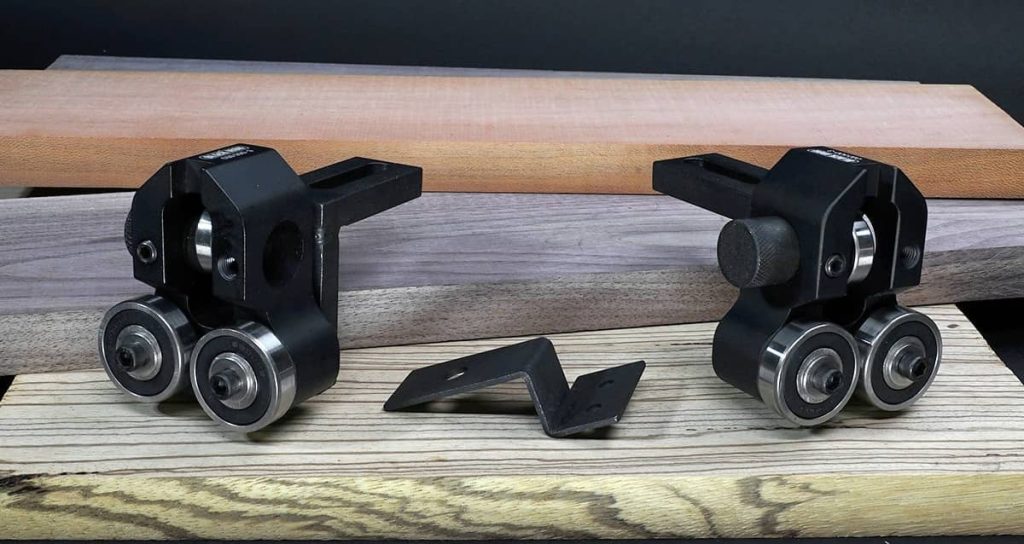
Guide blocks are a traditional bandsaw guide solution used on many older and current machines. They are commonly produced from materials such as steel, ceramic, carbide, or graphite-based compounds. These blocks remain stationary while providing lateral support to the blade.
Blade Support Using Guide Blocks
Two side blocks are positioned just behind the blade teeth and lightly contact the blade sides. A rear block supports the back of the blade when cutting pressure is applied. This setup helps control side movement and backward deflection, particularly during straight cuts and resaw operations.
Guide Blocks and Bearing Guides Comparison
| Feature | Guide Blocks | Bearing Guides |
|---|---|---|
| Contact Type | Fixed surface | Rolling contact |
| Friction Level | Higher (material dependent) | Lower |
| Maintenance Needs | Low | Periodic cleaning |
| Noise Output | Very low | Low |
| Cost Range | Lower | Higher |
| Support for Narrow Blades | Moderate | Strong |
| Resawing Stability | Strong | Very good |
Description of Bearing Guide Systems
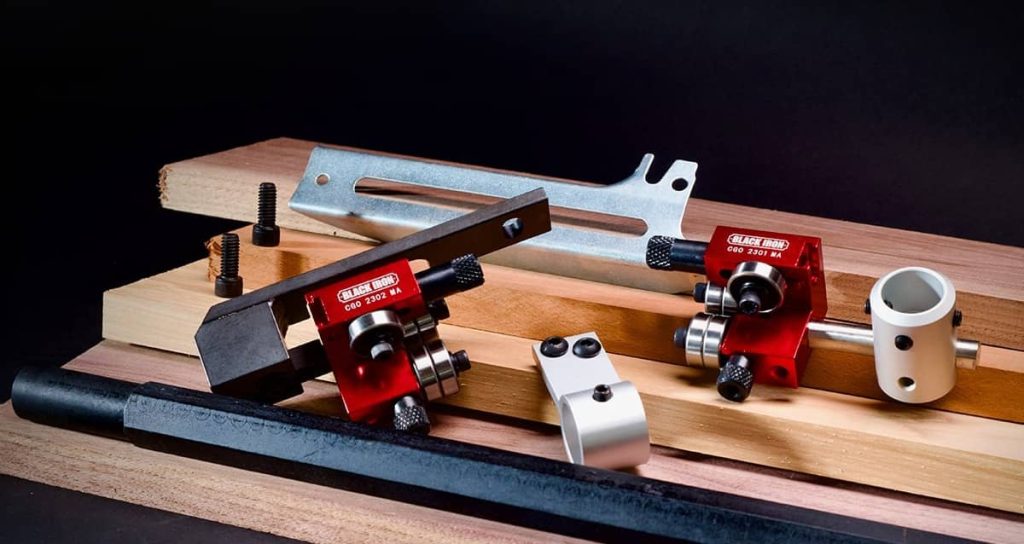
Bearing guide systems use small roller bearings rather than fixed blocks. One bearing is placed on each side of the blade, with an additional bearing at the rear. These bearings rotate with blade contact, which helps limit friction during cutting.
Blade Control with Bearing Guides
-
Side bearings limit side-to-side blade movement
-
Rear bearing supports backward blade motion
-
Rolling contact helps control heat during longer cuts
-
Blade stays centered during direction changes
Differences in Cutting Behavior
Guide blocks provide consistent side support due to their greater contact area, which can be beneficial for straight cutting and resawing. Bearing guides allow smoother blade movement with reduced friction, especially when making curved cuts or adjusting blade widths.
Maintenance and Setup Considerations
-
Guide blocks require accurate spacing to avoid added friction
-
Bearing guides need occasional cleaning to remove debris
-
Block systems contain fewer wear components
-
Bearing systems may require part replacement over time
-
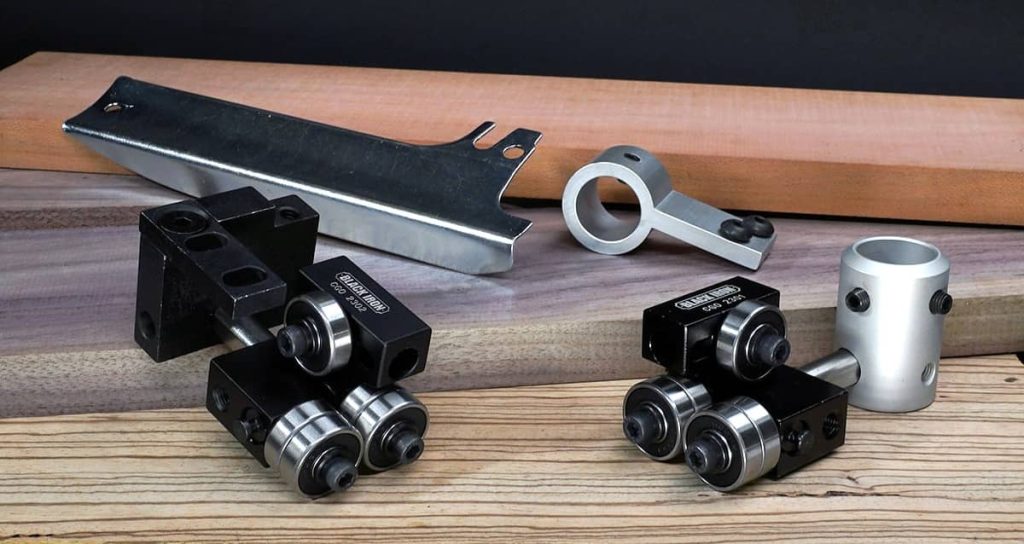
Bandsaw bearing guide system with adjustable side bearings and rear thrust bearing.
Learn How to Locate a Craftsman Bandsaw Parts Diagram
For step-by-step guidance on identifying and sourcing the correct documentation, we invite you to read “How to Find a Parts Diagram for a Craftsman 12-Inch Bandsaw.” This article explains where to locate model numbers, how to search reliable documentation sources, and how parts diagrams help match components accurately for maintenance and repairs.
Deciding Which Guide System Fits Your Bandsaw
-
Guide blocks suit straight cutting and stable blade setups
-
Bearing guides suit frequent blade changes and curved cutting
-
Some setups combine block-style side guides with a bearing thrust guide
-
Cutting habits should guide the final choice
Guide blocks and bearing guides both serve important roles in bandsaw guide systems. Guide blocks are commonly selected for simplicity and long service time, while bearing guides are chosen for smooth blade movement and easier adjustments. Selecting the appropriate guide system based on cutting style, blade size, and maintenance expectations helps support steady blade control and reliable cutting performance.