Understanding Why Tooth Count Matters for Every Cut
Selecting the right Teeth Per Inch (TPI) on your bandsaw blade directly affects cutting speed, surface finish, blade longevity, and overall cutting accuracy. Many operators focus heavily on blade width or material composition while overlooking TPI, but tooth count is one of the most practical factors you can control to improve your results. When you match TPI correctly to your material thickness and type, you reduce heat buildup, prevent premature blade wear, and achieve cleaner cuts with less effort. Getting this wrong leads to frustration, wasted materials, and blades that fail far sooner than they should. The good news is that understanding bandsaw blade TPI follows logical principles that anyone can learn and apply consistently.
The Basic Principles of Bandsaw Blade TPI
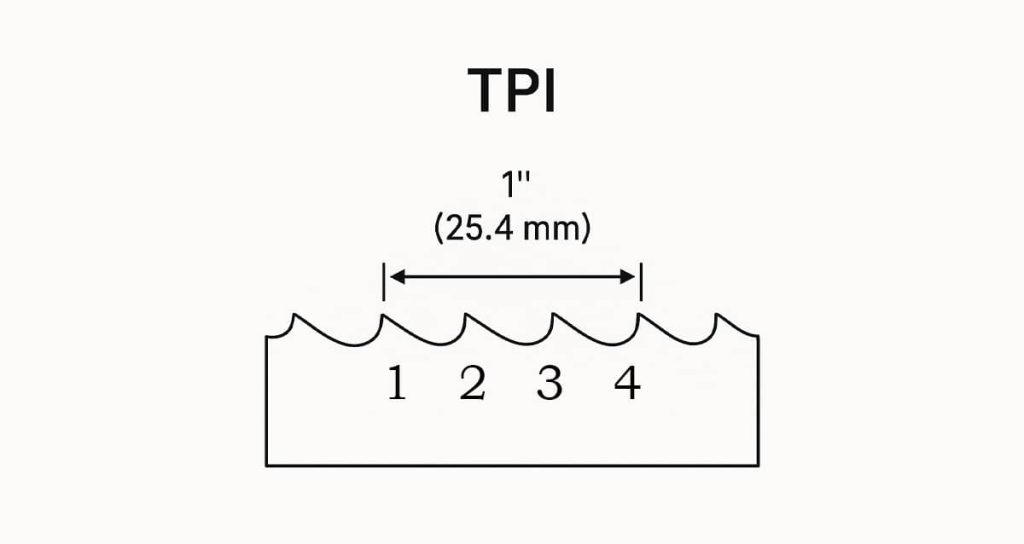
- TPI refers to the number of teeth counted within one inch of blade length, measured from tooth tip to tooth tip
- Lower TPI counts (2 to 6) feature larger teeth with deeper gullets designed for thicker materials and faster chip removal
- Higher TPI counts (14 to 32) have smaller teeth with shallow gullets suited for thin materials and smooth finishes
- The gullet is the curved space between teeth that carries chips away from the cut zone
- Proper TPI selection ensures adequate chip clearance while maintaining enough teeth in contact with the material for stability
- Variable pitch blades combine two different TPI counts to reduce vibration and handle materials with varying cross sections
Why the Wrong TPI Causes Problems
Choosing an incorrect tooth count creates predictable issues that many operators encounter without realizing the root cause. When you use too many teeth per inch on thick material, the small gullets cannot clear chips fast enough. This causes chips to pack into the gullets, generating excessive friction and heat. The blade begins to glaze over, losing its cutting edge while the material work hardens, especially in stainless steel or other tough alloys. Conversely, using too few teeth per inch on thin stock means insufficient teeth engage the material at any given moment. This creates an aggressive, grabbing action that can strip teeth completely or cause the blade to stall and bind.
The 3 to 6 Teeth Rule for Material Thickness
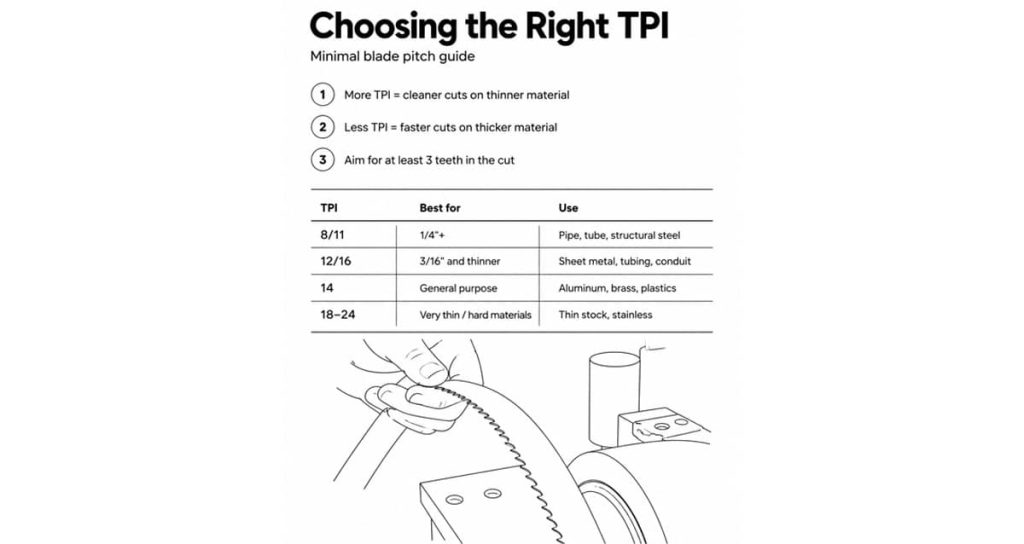
The most reliable guideline for bandsaw blade TPI selection is maintaining between three and six teeth in contact with the material at all times during the cut. This range provides optimal balance between chip removal capacity and cutting stability. Fewer than three teeth in the material causes excessive vibration, rough finishes, and potential tooth damage from impact loading. More than six teeth creates inadequate chip clearance, leading to heat buildup and glazing. To apply this rule, simply measure or estimate your material thickness and select a TPI that keeps tooth engagement within this range. For a one inch thick piece, a blade between 3 and 6 TPI works well. For quarter inch material, you would need 12 to 24 TPI.
Recommended TPI by Material Thickness
| Material Thickness | Recommended TPI Range | Best Application |
| 1/8 inch or less | 18 to 32 TPI | Thin wall tubing, sheet metal |
| 1/8 to 1/4 inch | 14 to 18 TPI | Light structural shapes, thin solids |
| 1/4 to 1/2 inch | 10 to 14 TPI | Medium tubing, small bar stock |
| 1/2 to 1 inch | 6 to 10 TPI | Solid rounds, medium structural |
| 1 to 2 inches | 4 to 6 TPI | Heavy bar stock, large solids |
| 2 to 4 inches | 3 to 4 TPI | Large billets, thick plate |
| 4 inches and above | 2 to 3 TPI | Heavy production cutting |
Special Considerations for Structural Shapes and Tubing
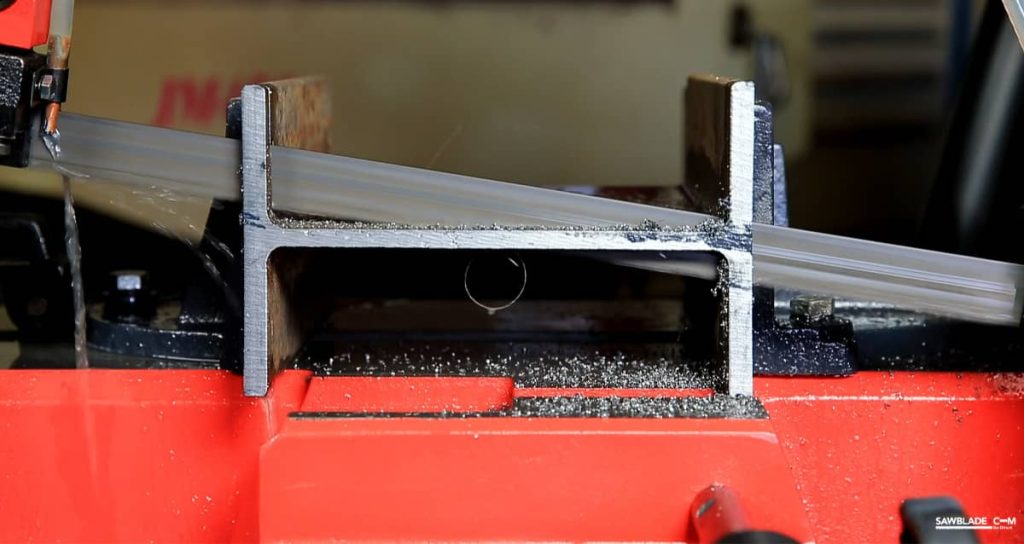
Cutting tubing, angle iron, channel, and I beams requires different thinking than cutting solid material because the blade encounters varying thicknesses throughout a single cut. When your blade enters a piece of square tubing, it first contacts a thin wall section, then passes through open space, then contacts the opposite wall. A blade optimized for the total cross section would have too few teeth for the thin wall sections. This is exactly where variable pitch blades prove valuable, as they combine two TPI counts to handle both thin and thick portions of structural cuts. For consistent results with structural shapes, base your TPI selection on the wall thickness rather than the overall dimensions.
Signs Your TPI Is Too High for the Material
- Chips appear powdery or dust like instead of forming distinct curls or small pieces
- The blade runs hot to the touch after cutting
- Cut surfaces show a glazed or burnished appearance rather than normal saw marks
- Cutting speed slows dramatically even with proper feed pressure
- The blade loses sharpness much faster than expected
- Material discoloration occurs along the cut edges, especially on steel and stainless
- You notice a burning smell during operation
How Material Type Affects TPI Requirements
Beyond thickness, the type of material you cut influences ideal tooth count within your chosen range. Softer materials like aluminum, brass, and mild steel allow you to use slightly lower TPI counts because chips clear easily and heat dissipates quickly. Harder materials such as stainless steel, tool steel, and high nickel alloys benefit from slightly higher TPI counts within the acceptable range because more teeth distribute cutting forces and reduce individual tooth loading. Work hardening metals require particular attention since heat buildup accelerates this problem. When cutting stainless, staying toward the middle or higher end of your TPI range while maintaining proper feed rate helps prevent glazing and extends blade life substantially.
ALSO WORTH READING
Struggling with Tooth Stripping on Structural Cuts?
If you frequently work with structural shapes like I-beams, channels, or angle iron, you know how tough they can be on saw blades. Uneven cross-sections and varying material thickness create challenges that often lead to premature tooth wear or stripping. We put together a guide that covers the techniques and blade choices that help you get cleaner cuts while protecting your equipment. Check out “Cutting Structural Shapes: How to Prevent Tooth Stripping” for practical tips you can apply on your next project.
Signs Your TPI Is Too Low for the Material
- The blade grabs or catches during entry into the material
- Teeth strip off the blade, especially when starting cuts
- Excessive vibration occurs throughout the cutting stroke
- Cut surfaces show rough, torn edges rather than clean saw marks
- The blade tends to wander or drift from the intended cut line
- Audible banging or impact sounds during cutting
- The workpiece moves or shifts despite proper clamping
The Role of Bandsaw Guides in TPI Performance
Even perfect TPI selection for your bandsaw blade cannot compensate for worn or misaligned blade guides. Guides support the blade just above and below the cut zone, preventing twisting and lateral movement that causes uneven tooth loading. When guides wear out or lose adjustment, the blade bounces and flexes during cutting. This movement causes some teeth to dig deeper while others barely contact the material, creating the same problems as incorrect TPI selection. Operators often blame blade quality or tooth count when the real issue is guide condition. Inspecting and replacing guides regularly ensures your chosen TPI performs as intended and delivers the results you expect.
Practical Tips for TPI Selection Success
- Keep a reference chart near your bandsaw for quick TPI lookup based on material thickness
- When in doubt between two TPI options, choose the higher count for harder materials and the lower count for softer ones
- Test cuts on scrap material help verify your selection before committing to production pieces
- Monitor chip formation during the first few inches of every cut as your primary feedback indicator
- Document which TPI works best for materials you cut frequently to eliminate guesswork
- Consider variable pitch blades for shops that cut mixed materials and structural shapes regularly
- Replace blades before excessive wear forces you to compensate with improper feed rates
Bringing It All Together for Better Cuts
Choosing the right TPI for your bandsaw blade does not require guesswork once you understand the underlying principles. Start with the 3 to 6 teeth rule based on material thickness, adjust for material hardness, and account for structural shapes that present varying cross sections. Pay attention to the feedback your cuts provide through chip formation, surface finish, and blade temperature. Maintain your blade guides in proper working condition so your TPI selection can perform as expected. With these fundamentals in place, you will consistently achieve cleaner cuts, longer blade life, and more efficient operation across virtually any material that passes through your bandsaw.