Why Guide Alignment Plays a Key Role in Blade Durability
Bandsaw blades endure the greatest strain at the guide assemblies, not at the wheels. When guides are incorrectly aligned or spaced, even well-made carbon, bi-metal, or carbide blades can wear out far sooner than expected. Proper guide alignment keeps the blade stable during cutting, limits unwanted flex, and reduces concentrated stress that leads to cracking, dull edges, or weld separation. A correctly aligned guide system promotes straight tracking and steady cutting pressure from start to finish.
What a Properly Aligned Guide System Delivers
-
Keeps the blade centered between the wheels
-
Controls side movement during cutting
-
Limits heat generated by friction
-
Allows teeth to cut freely without interference
-
Prevents constant thrust bearing contact
-
Supports smoother and more predictable cuts
How Bandsaw Guides Manage Blade Behavior
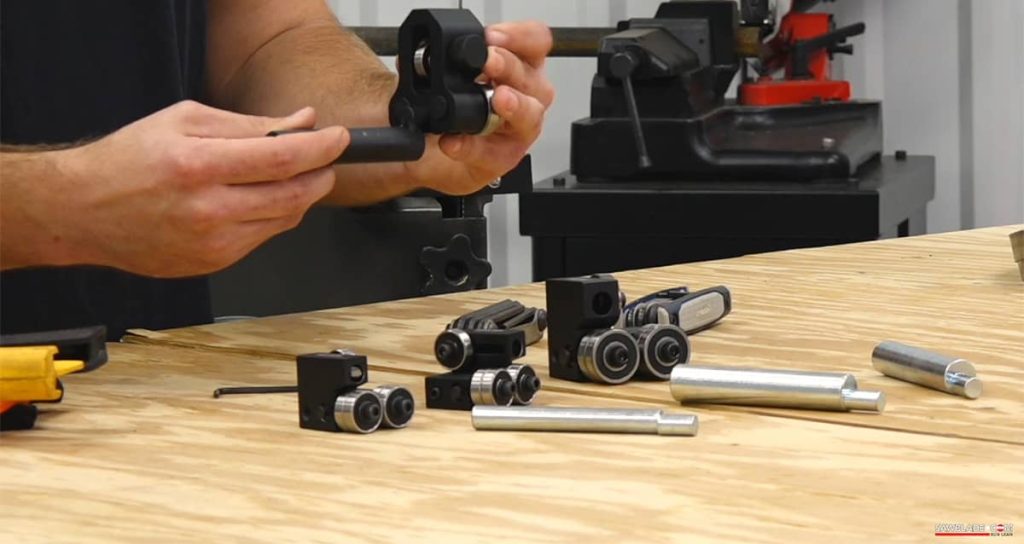
Most bandsaws use two side guides along with a rear thrust bearing to control blade motion. The side guides limit lateral movement and reduce twisting, while the thrust bearing supports backward force created when material is fed into the blade. Together, these components influence how the blade reacts to cutting pressure. Their alignment has a greater impact on performance than whether the guides are blocks or bearings.
Alignment Issues That Lead to Blade Wear
Blade wear is commonly caused by setup errors rather than blade construction. Side guides set too close to the teeth can dull cutting edges, while guides set too far away allow excessive movement. Uneven pressure on one side pushes the blade off its natural path, increasing fatigue near the weld. Continuous contact with the thrust bearing adds heat to the blade back and accelerates wear.
Common Guide Alignment Problems and Corrections
| Symptom | Likely Cause | Recommended Adjustment |
|---|---|---|
| High-pitched noise while cutting | Guides too tight | Increase clearance slightly |
| Blade pulls off line | Uneven side guide contact | Equalize side pressure |
| Polished wear on blade back | Thrust bearing always engaged | Move bearing slightly rearward |
| Blade breaks near weld | Excess flex | Reduce side clearance and realign |
| Scorching on material | Excess friction | Clean guides and reset spacing |
Correct Thrust Bearing Placement
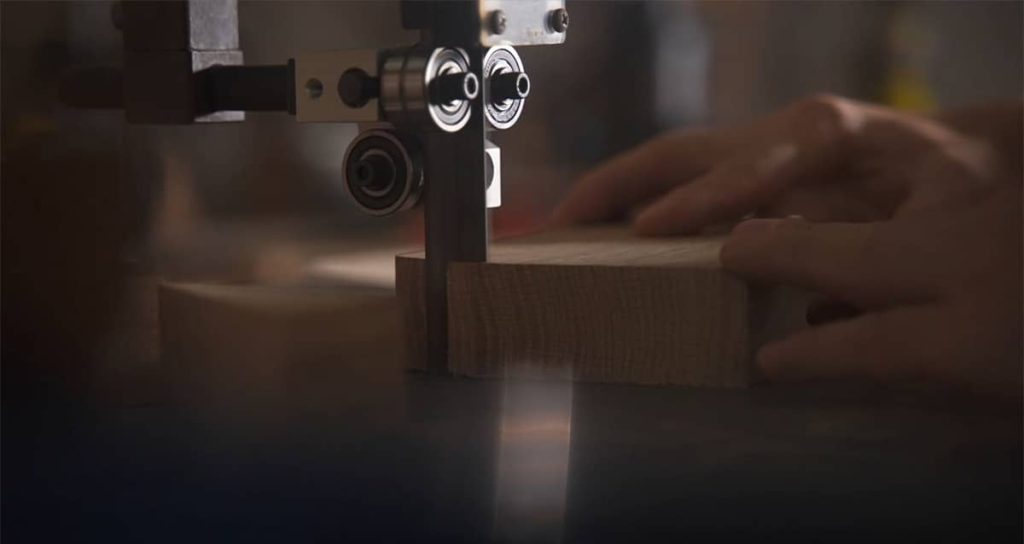
The thrust bearing should sit just behind the blade without touching it when the saw is running without a load. Contact should occur only when cutting pressure is applied. This setup protects the blade back from constant wear while still supporting the blade when resistance increases during a cut.
Basic Guide Alignment Procedure
-
Install the blade and apply the proper tension for its width
-
Confirm blade tracking is centered on both wheels
-
Position thrust bearings just behind the blade back
-
Place side guides behind the gullets, avoiding tooth contact
-
Set equal spacing on both sides using a thin paper gap
-
Apply the same alignment steps to the lower guides
Why Upper and Lower Guide Alignment Must Match
Upper and lower guides function as a single system. If one set is out of alignment, the blade twists between them, increasing stress during cutting. Keeping both guide assemblies square to the table and vertically aligned ensures steady blade support through the entire cutting height.
Warning Signs That Guide Alignment Needs Attention
-
Blades dull more quickly than expected
-
Unexpected blade breakage
-
Difficulty maintaining straight cuts
-
Excess heat near guide assemblies
-
Frequent need for readjustment
-
Uneven wear patterns along the blade
Understanding Blade Guide Systems for Delta Bandsaws
Blade guides play a major role in how smoothly and accurately a Delta bandsaw cuts. If you’re deciding between steel blocks, ceramic guides, or bearing systems, our article “Delta Bandsaw Blade Guides Explained: Steel, Ceramic, or Bearing Systems” walks through how each option supports the blade, manages heat, and affects maintenance. It’s a helpful read for selecting a guide setup that matches your cutting style and shop demands.
Explore Bandsaw Guide Options Online
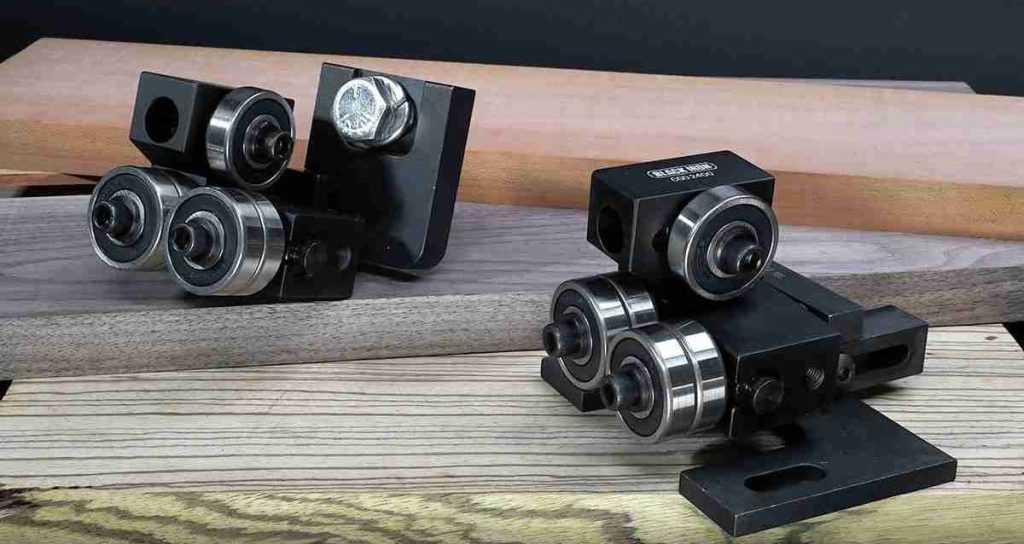
For woodworkers using 14″ or 18″ bandsaws from manufacturers such as Delta, Jet, Grizzly, or Powermatic, aftermarket guide kits are widely available through Sawblade.com and Guidekits.com. These conversion kits are designed to replace original guide components with improved assemblies that promote steadier blade tracking, lower friction, and longer blade use, offering a practical upgrade path without changing the saw itself.
How Upgraded Guides Help Reduce Blade Wear
Upgraded guide systems, including precision-machined blocks and sealed bearing assemblies, provide smoother blade support and more consistent spacing. These systems reduce friction, limit heat transfer into the blade, and simplify adjustments. On saws that see regular use, upgraded guides often improve cutting reliability and reduce blade replacement frequency.
Premature bandsaw blade failure is usually the result of guide alignment issues rather than cutting conditions. Taking time to align side guides accurately, position thrust bearings correctly, and match upper and lower assemblies can greatly improve blade service time. Proper guide alignment reduces wear, limits heat, and supports cleaner, more consistent cuts making it one of the most effective ways to protect bandsaw blades over the long term.