Understanding the Challenge of Cutting Stainless Steel
Stainless steel presents one of the most demanding cutting challenges in any metal fabrication shop. The material’s high chromium content, work-hardening characteristics, and natural toughness make it significantly harder to cut than standard carbon steel. Many operators find themselves burning through blades quickly or struggling with poor cut quality when working with stainless grades. M42 bandsaw blades have emerged as a preferred solution for this exact problem, offering the heat resistance and edge retention needed to handle stainless steel’s demanding properties. The cobalt content in M42 high-speed steel allows the cutting edge to maintain its hardness even when temperatures climb during extended cuts, which is precisely what stainless steel cutting requires.
Why M42 Bi-Metal Construction Matters for Stainless
- The 8% cobalt content in M42 steel provides superior red hardness compared to standard M2 high-speed steel
- Bi-metal construction combines a fatigue-resistant carbon steel backer with hardened M42 teeth for flexibility and cutting power
- M42 maintains its cutting edge at temperatures up to 1100°F, while standard high-speed steel begins softening around 900°F
- The welded tooth design allows the blade body to flex without cracking while the teeth stay rigid during cuts
- Extended blade life reduces downtime and blade change frequency when processing multiple stainless steel pieces
How Stainless Steel Work-Hardens During Cutting
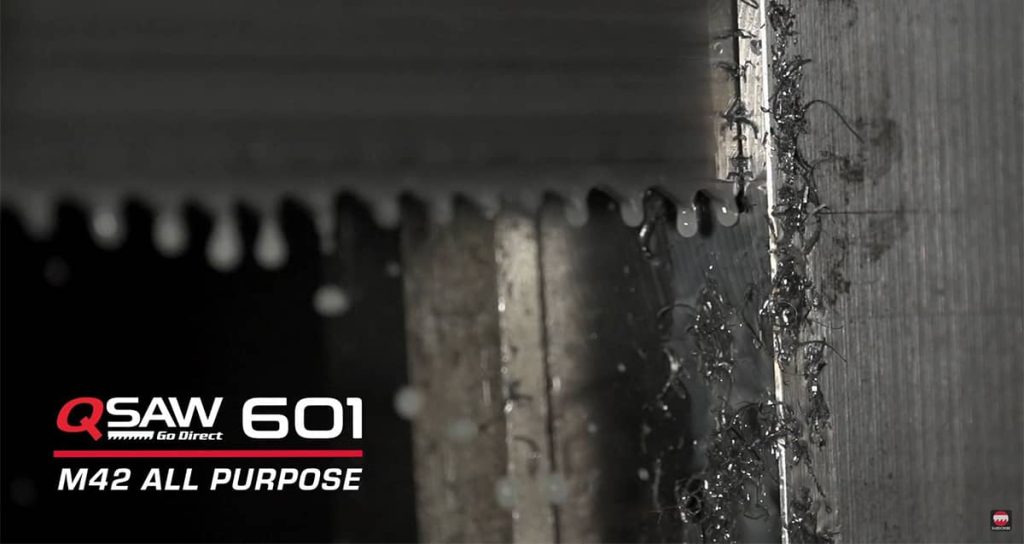
When a bandsaw blade cuts through stainless steel, the material directly beneath the teeth undergoes a transformation. The friction and pressure cause the stainless to harden at the cutting surface, sometimes doubling or tripling its original hardness within milliseconds. This work-hardening effect creates a tough layer that can quickly dull inferior blades. M42 bandsaw blades are specifically designed to push through this hardened zone before it has time to fully develop. The key is maintaining consistent feed pressure and appropriate blade speed so each tooth takes a fresh bite rather than rubbing against already-hardened material. Operators who allow the blade to dwell or reduce pressure inadvertently accelerate work-hardening and shorten blade life considerably.
The Role of Tooth Geometry in Stainless Steel Performance
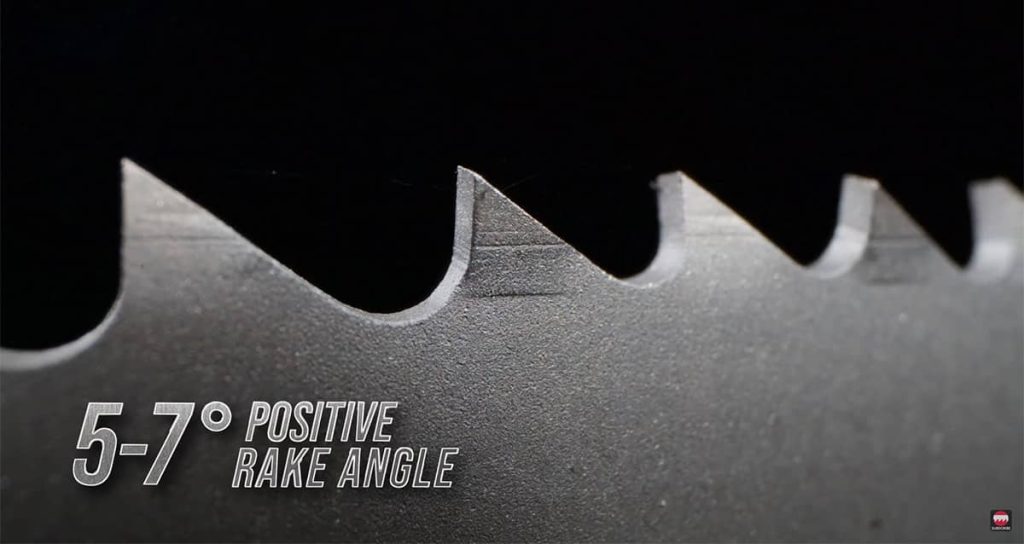
Beyond the blade material itself, tooth geometry plays a significant role in how effectively an M42 bandsaw blade handles stainless steel. A positive rake angle, typically in the 5 to 7 degree range, allows teeth to slice into the material rather than scraping across it. This aggressive cutting action is essential for stainless because it removes material before heat can build up excessively. Ground tooth forms outperform stamped alternatives because they create sharper, more consistent cutting edges. The alternating tooth set pattern, where teeth stagger left and right at regular intervals, clears chips efficiently and prevents the kerf from binding against the blade body. Poor chip evacuation is one of the primary causes of blade failure in stainless applications.
Cutting Performance Comparison by Stainless Grade
| Stainless Grade | Typical Hardness (HRC) | M42 Cutting Difficulty | Recommended Blade Speed (SFPM) | Feed Rate Adjustment |
| 304/304L | 15-20 | Moderate | 175-225 | Standard |
| 316/316L | 15-20 | Moderate | 170-220 | Standard |
| 410 | 35-45 | High | 140-180 | Reduce 15% |
| 17-4 PH | 40-48 | Very High | 120-160 | Reduce 25% |
| Duplex 2205 | 25-32 | High | 150-190 | Reduce 20% |
| 440C | 55-60 | Extremely High | 80-120 | Reduce 40% |
Feed Pressure and Speed Settings for Best Results
Getting the right combination of feed pressure and blade speed is where many operators struggle with stainless steel cutting. Too much speed generates excessive heat that work-hardens the material and degrades the blade edge. Too little pressure causes the teeth to rub rather than cut, creating the same overheating problem from a different angle. For most 300-series stainless steels, blade speeds between 170 and 225 surface feet per minute work well with M42 blades. The feed pressure should produce a continuous chip that curls away from the cut, indicating proper tooth engagement. Thin, powdery chips suggest insufficient pressure, while thick, discolored chips indicate excessive heat buildup. Experienced operators often listen to the cut as much as they watch it, recognizing the steady hum of proper blade engagement versus the pitch changes that signal problems.
Signs Your M42 Blade Is Performing Well on Stainless
- Consistent chip formation with a slight curl and minimal discoloration
- Straight, accurate cuts without wandering or barrel shapes
- Blade tracking remains stable throughout the cut
- Cutting times stay predictable across multiple pieces of the same material
- Minimal noise increase or vibration changes during operation
- Clean cut surfaces requiring little to no secondary finishing
Why Coolant Selection Affects M42 Blade Life in Stainless
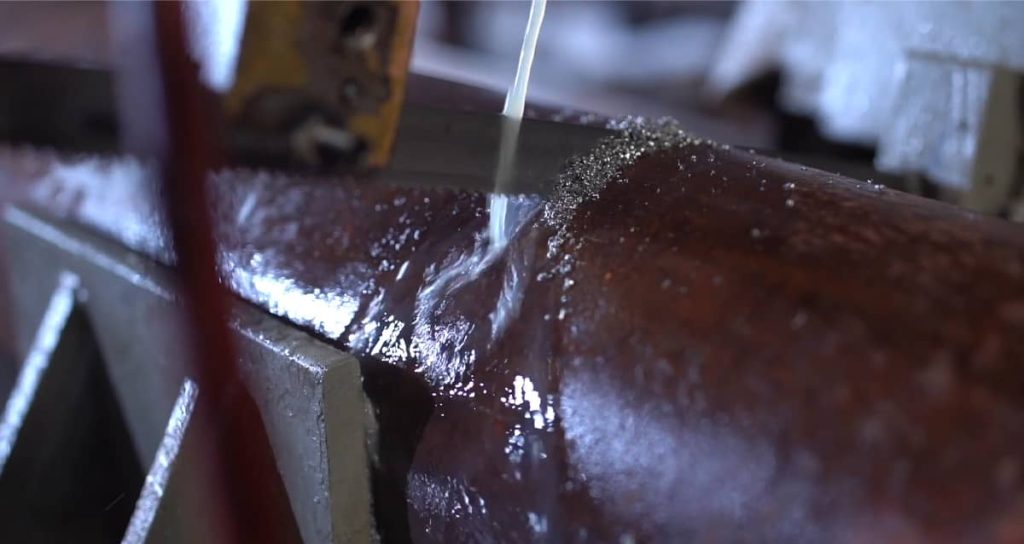
Coolant does far more than just reduce heat when cutting stainless steel with M42 bandsaw blades. The right cutting fluid acts as a lubricant between the blade and workpiece, reduces friction at the chip-tooth interface, and helps flush chips from the kerf before they can reweld to the cut surface. Water-soluble coolants mixed at 8 to 10 percent concentration typically perform best for stainless applications. Straight cutting oils can also work well, particularly on harder grades like 17-4 PH or 440C. The coolant delivery method matters too. Flood coolant systems that direct fluid directly into the cut outperform mist systems when processing stainless because they provide both cooling and chip evacuation simultaneously. Neglecting coolant maintenance, such as allowing concentration to drop or contamination to build, noticeably shortens blade life.
ALSO WORTH READING
Setting Up Your Ridgid Bandsaw?
If you own a Ridgid 14″ bandsaw or you’re thinking about getting one, I’ve put together a detailed guide that walks you through the entire setup process from unboxing to first cuts. It also covers some practical upgrades that can make a real difference in how the saw performs. Check out the Complete Ridgid 14″ Bandsaw Setup and Upgrade Guide for step-by-step instructions and tips I’ve learned from hands-on experience.
Common Mistakes That Shorten Blade Life on Stainless
- Starting a cut with insufficient feed pressure, allowing teeth to rub and glaze
- Running blade speeds appropriate for carbon steel rather than adjusting for stainless
- Using worn guides that allow blade deflection and wandering cuts
- Failing to break in new blades properly before running at full feed rates
- Ignoring coolant concentration and cleanliness standards
- Attempting to cut work-hardened material without adjusting parameters
How the Qsaw 601 Handles Multiple Stainless Grades
The Qsaw 601 represents what a well-engineered M42 bi-metal bandsaw blade can accomplish across various stainless steel grades. Built with an M42 cobalt high-speed steel edge and an aggressive ground tooth form featuring a 5 to 7 degree positive rake angle, this blade delivers fast cutting rates while maintaining extended life. The fatigue-resistant backer and alternating tooth set reduce noise, vibration, and chatter during operation, resulting in cleaner and more accurate cuts. Heat resistance, abrasion resistance, and shock resistance make it suitable for both vertical and horizontal bandsaw machines. Steel service centers, fabricators, and tool and die shops find this blade particularly valuable because it handles carbon steel, alloy steel, chrome steel, die steel, tool steel, stainless steel, nickel-based steel, and tube equally well. Custom-built to exact specifications, the Qsaw 601 eliminates the need to swap blades when switching between materials.
Maintenance Practices That Extend M42 Blade Performance
- Check blade tension before each shift and adjust according to manufacturer specifications
- Inspect guide bearings and blocks weekly for wear that allows blade movement
- Clean coolant tanks monthly and replace fluid according to a regular schedule
- Track blade life by material type and thickness to identify patterns and optimize parameters
- Allow new blades a 15 to 20 minute break-in period at reduced feed rates
- Store unused blades properly to prevent kinks, rust, or tooth damage
Making the Right Blade Selection for Your Stainless Work
Selecting the right M42 bandsaw blade for stainless steel cutting depends on the specific grades you process, typical material thicknesses, and production volume requirements. For general fabrication shops that cut various stainless grades occasionally alongside other steels, a versatile all-purpose blade like the Qsaw 601 makes practical sense because it performs well across material types without requiring constant blade changes. High-volume stainless processors might benefit from finer tooth pitches for thinner materials or coarser options for heavy plate work. Consider the bandsaw blade options that match your most common applications first, then evaluate whether specialized blades would improve efficiency for secondary materials. The goal is finding the balance between blade cost, cutting performance, and changeover time that works best for your specific operation. M42 blades cost more than standard bi-metal options upfront, but their extended life and superior cut quality typically deliver lower cost per cut in stainless steel applications.