Understanding Why Your Bandsaw Blade Won’t Stay Centered
Few things frustrate woodworkers more than a bandsaw blade that refuses to stay put. You set it up, start cutting, and within minutes the blade is drifting toward the edge of the wheel or worse, jumping off entirely. Blade tracking refers to how the bandsaw blade rides on the upper and lower wheels during operation. When properly set, the blade runs consistently centered on the crown of the tire, making smooth and predictable cuts. When tracking fails, you get wandering cuts, premature blade wear, and potential safety hazards. The good news is that most bandsaw blade tracking problems stem from a handful of common causes, and nearly all of them can be fixed without replacing major components.
Common Signs Your Bandsaw Has a Tracking Problem
- The blade drifts toward the front or back edge of the wheels during operation
- You hear clicking or rubbing sounds as the blade contacts guides or housings
- The blade derails completely when you start the saw
- Cuts wander even when you apply consistent feed pressure
- The blade twists visibly while running
- You need to constantly readjust tracking between uses
- The blade develops unusual wear patterns on one side
Why Proper Blade Tracking Matters for Every Cut
A bandsaw that tracks correctly is a pleasure to use. The blade stays stable, cuts remain true, and you can focus on the work rather than babysitting the machine. Poor tracking, on the other hand, creates a cascade of problems that affect everything from cut quality to blade life. When a blade runs off center, it contacts parts of the saw it should not touch, generating heat and friction that accelerate wear. Twisted or stressed blades also produce rough, wavy cuts that require extra sanding or even ruin your workpiece. Beyond frustration, there are real safety concerns when blades jump off wheels unexpectedly. Taking time to understand and fix tracking issues pays off in cleaner results and longer intervals between blade changes.
The Most Common Cause: Improper Tracking Adjustment
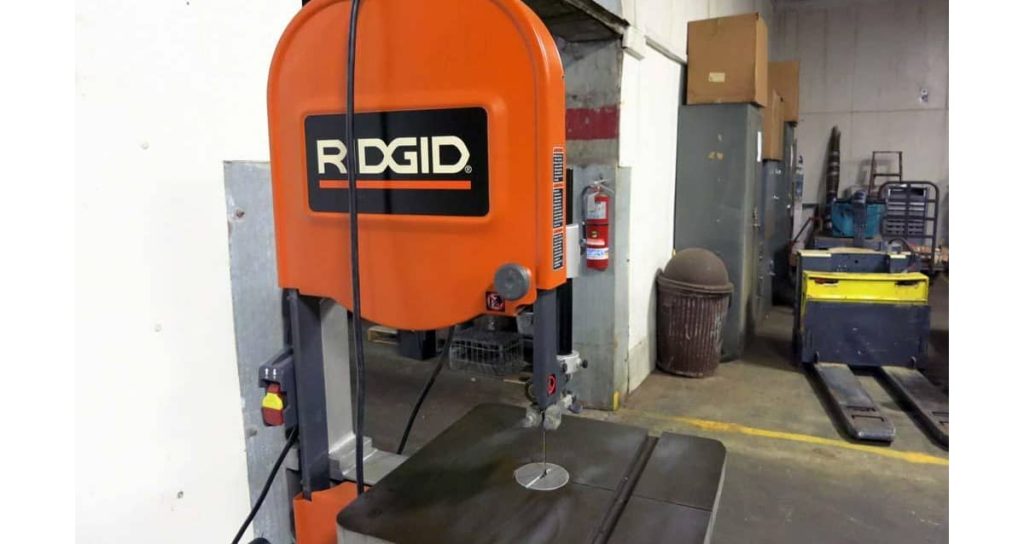
Before assuming something is broken, check the most obvious culprit first. The tracking adjustment knob, typically located on the upper wheel housing, controls the tilt angle of the upper wheel. This small adjustment determines whether the blade rides centered or creeps toward the edges. To set tracking correctly, back off all blade guides completely and apply proper tension for your blade width. Then spin the upper wheel slowly by hand while turning the tracking knob until the blade settles into the center of the tire crown. Many operators make the mistake of adjusting tracking with the guides engaged, which masks the real position and leads to problems once cutting begins. A quality bandsaw blade combined with correct tracking adjustment solves most centering issues immediately.
Quick Reference: Bandsaw Blade Tracking Causes and Solutions
| Problem | Symptoms | Fix |
| Improper tracking adjustment | Blade drifts consistently in one direction | Adjust upper wheel tilt with tracking knob while spinning by hand |
| Worn or damaged tires | Blade wanders unpredictably, flat spots visible on rubber | Replace with urethane tires that restore proper crown |
| Incorrect blade tension | Blade flexes excessively or makes popping sounds | Increase or decrease tension to match blade width |
| Wheel misalignment | Tracking impossible to set, blade twists visibly | Check coplanar alignment with straightedge, shim if needed |
| Defective blade | One blade won’t track while others do | Replace the blade |
| Misadjusted guides | Blade pushed off center during cuts | Back off guides, set tracking first, then readjust guides |
| Worn crown on tires | Blade slides side to side with no centering tendency | Install new tires with proper crown profile |
| Frame or wheel damage | Persistent issues after all other fixes attempted | Inspect for bent wheels, warped frame, or damaged trunnion |
How Blade Tension Affects Tracking Stability
Getting tension right is more nuanced than many operators realize. Too little tension allows the blade to flex and wander, making consistent tracking nearly impossible. The blade simply lacks the stiffness to hold its position on the wheels under cutting pressure. Too much tension, however, puts excessive stress on wheel bearings and can actually cause the blade to break prematurely. The key is matching tension to blade width since wider blades require significantly more tension to perform correctly. A quarter inch blade needs far less tension than a three quarter inch resawing blade. Most bandsaws include tension markings on the adjustment mechanism, but these serve only as starting points. Learning to feel correct tension by deflecting the blade slightly with finger pressure takes practice but gives you a reliable reference that works across different blade types.
Recognizing When Tires Need Replacement
- The tire surface shows visible cracks, chunks, or deterioration
- Flat spots have developed from the saw sitting unused
- The crown profile has worn flat, eliminating the centering effect
- Rubber has hardened and lost its grip on the blade
- The blade leaves black marks on your workpiece from degraded rubber
- Tracking requires constant adjustment even with correct settings
- You notice the blade skating or slipping during cuts
Why Wheel Alignment Problems Cause Persistent Tracking Issues
When the upper and lower wheels are not coplanar, meaning they do not sit in the same plane, the blade gets pulled in conflicting directions. This creates a situation where no amount of tracking adjustment fully solves the problem. The blade might track reasonably at rest but wander badly under load, or it might require such extreme tracking adjustment that it rides on the very edge of the tire. Checking wheel alignment requires placing a straightedge across both wheel rims with the blade removed. Any gap or wobble indicates misalignment that needs correction. Solutions include shimming the wheels, adjusting the trunnion that holds the upper wheel assembly, or replacing worn bearings that allow play in the wheel position. Frame damage from drops or impacts can also throw alignment off permanently, though this is relatively rare.
ALSO WORTH READING
Exploring Delta Benchtop Bandsaws?
If you’re specifically interested in Delta’s lineup of compact bandsaws, we’ve put together a dedicated guide that takes a closer look at their benchtop models. It breaks down the key differences between each option and ranks them based on performance, features, and overall value. Whether you’re a hobbyist or a serious woodworker with limited shop space, you’ll find the comparison helpful for narrowing down your choices.
Step by Step Tracking Reset Procedure
- Unplug the bandsaw from power before beginning any adjustments
- Remove the blade and inspect it for twists, cracks, or weld defects
- Check tire condition on both wheels for wear, cracks, or flat spots
- Reinstall the blade and apply moderate tension initially
- Back off all guides completely so they do not contact the blade
- Rotate the upper wheel slowly by hand while adjusting the tracking knob
- Watch the blade position and continue adjusting until it stays centered on the tire crown
- Increase tension to the appropriate level for your blade width and type
- Recheck tracking at full tension and fine tune if needed
- Adjust side guides and thrust bearings only after tracking is stable
- Run the saw briefly without cutting and observe blade behavior
Guide Setup and Its Relationship to Tracking
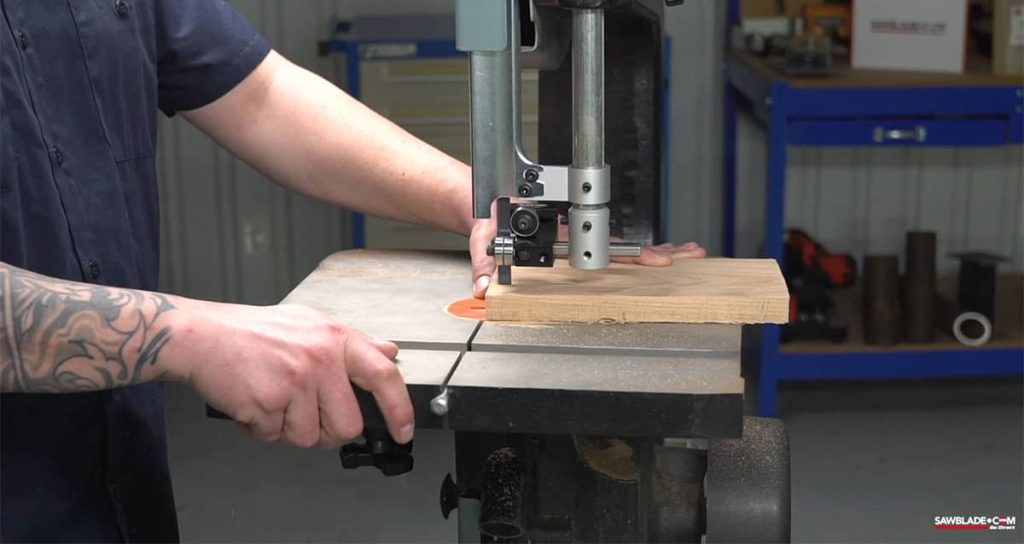
Many operators blame tracking problems on guide settings when the relationship actually works the other way around. Blade guides exist to support the blade and prevent twisting under cutting load. They do not steer the blade or control its position on the wheels. When side guides are set too tight, they push against the blade and force it off center, making it appear that tracking is failing when the real problem is guide interference. The correct sequence is always to set tracking first with guides backed away, then bring guides into position afterward. Side guides should sit just close enough to prevent blade deflection without actually contacting the blade when it runs free. The thrust bearing behind the blade should only make contact when you push material into the cut, not during idle running.
When to Suspect the Blade Itself
- The blade has a visible twist from improper storage or handling
- Weld joint appears uneven, lumpy, or off center
- Blade width varies along its length
- Teeth are severely dulled or damaged on one side
- One specific blade won’t track while all others work fine
- The blade makes a clicking sound each time the weld passes the guides
- You notice the blade was stored coiled tightly for an extended period
Final Thoughts on Keeping Your Bandsaw Running True
Most bandsaw blade tracking problems come down to three factors: tension, tire condition, or tracking adjustment itself. Working through setup methodically before assuming major component failure saves both time and money. Start with the simple fixes since adjusting the tracking knob costs nothing and takes only minutes. Move on to tire inspection if basic adjustment does not solve the issue. Pay attention to blade quality as well, because even perfect machine setup cannot compensate for a twisted or defective blade. Choosing the right blade for your bandsaw and maintaining your equipment regularly prevents most tracking headaches before they start. When you do encounter problems, approach troubleshooting systematically rather than making multiple changes at once. This way, you identify the actual cause and avoid creating new issues while trying to fix old ones. A well tuned bandsaw with proper tracking is one of the most versatile tools in any shop, and keeping it running smoothly is well worth the effort.