Why a 20-Inch Bandsaw Can Be a Smart Next Step
A 20-inch bandsaw fills a very useful role in the shop. It offers the size, strength, and cutting capacity needed for regular hardwood resawing, but it is still a workable option for many dedicated home shops and smaller professional setups. This is not simply a larger version of a 14-inch or 17-inch saw. In most cases, you get more motor power, a heavier frame, stronger tensioning, wider blade support, and a more stable feel during longer cuts. That difference becomes clear when you are resawing thick boards, making veneers, cutting bowl blanks, or trying to hold a straight line through dense stock. For woodworkers who keep running into the same limits on a smaller saw, a 20-inch bandsaw can be the upgrade that finally makes the work easier.
Signs It May Be Time to Move Beyond Your Current Saw
- You often resaw hardwood thicker than 8 inches and the saw struggles to stay on line.
- You want to use a 3/4-inch or 1-inch blade, but your current saw cannot tension it well.
- Blade drift keeps showing up even after setup and blade changes.
- Vibration or frame movement is affecting the cut.
- You do veneer work often and need straighter, more repeatable results.
- Your saw handles curves well, but falls short on heavier straight cuts.
- You feel like your 14-inch or 17-inch machine is being pushed too hard too often.
What Sets a 20-Inch Bandsaw Apart From Smaller Machines
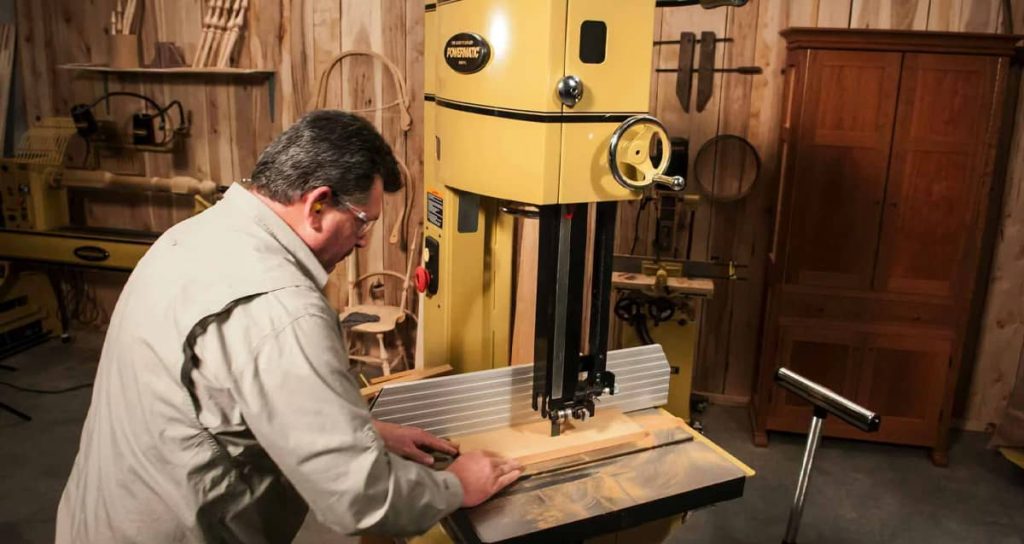
The main difference goes beyond throat size. A real 20-inch bandsaw is built as a heavier, stronger machine from the start. Many models offer 12 to 16 inches of resaw height, motors in the 3 HP to 5 HP range, and enough frame strength to hold proper tension on wider blades. In practical use, that leads to smoother feeding, better control in thick material, and less wandering once the cut starts demanding more from the saw. One thing many woodworkers notice right away is how settled the machine feels. A solid 20-inch bandsaw does not sound like it is struggling every time thick hardwood reaches the blade.
When a 20-Inch Bandsaw Upgrade Makes Sense
The best reason to upgrade is simple: your work needs more than your current saw can give. If most of your cutting is smaller stock, gentle curves, and occasional resawing under 6 inches, a 20-inch bandsaw may be more machine than necessary. But if you resaw often, work with dense hardwood, or spend too much time fixing cuts that should have been straight from the start, moving up becomes easier to justify. The real gain is consistency. You spend less time making extra passes, less time adjusting around machine limits, and less time dealing with cuts that wander for reasons your setup cannot fully solve.
Where a 20-Inch Bandsaw Makes the Biggest Difference
| Area | What Improves | Why It Helps in Daily Use |
|---|---|---|
| Resaw height | Taller stock can be cut in one pass | Useful for veneers, bookmatching, and milling thick lumber |
| Motor power | Better cutting through dense wood | Helps the saw maintain feed speed in hardwood |
| Blade support | Wider blades perform better | Helps improve straight-line resawing |
| Frame mass | Less vibration and flex | Improves control and cut feel |
| Tension system | More dependable blade tension | Important when using wider blades for straight cuts |
| Surface quality | Cleaner cuts with less wandering | Reduces cleanup after sawing |
| Workflow | Better for repeated long cuts | Makes regular milling work easier and more consistent |
Upgrade the Blade First Before Looking at Accessories
The first improvement that usually gives the most noticeable result is a better blade. Factory blades are often fine for quick testing, but not much beyond that. A good blade can change the way a 20-inch bandsaw cuts almost immediately. For hardwood resawing, a 3/4-inch to 1-inch carbide-tipped or premium bimetal blade is often the strongest choice. For more general work, a quality 1/2-inch hook tooth blade handles a wide range of tasks well. A blade matched to the work, welded to the correct length, and running true will often do more for performance than many aftermarket add-ons. On a 20-inch bandsaw, strong blade quality is one of the first things that lets the machine show what it can really do.
Setup Points Worth Checking Right Away
- Make sure the wheels are aligned and the blade tracks near the middle of the crown.
- Set the blade tension more carefully than the factory gauge alone allows.
- Adjust the upper and lower guides so they support the blade without squeezing it.
- Square the table to the blade before setting up any resaw fence.
- Check fence alignment and only correct for drift if the blade and setup actually need it.
- Test with the blade width you plan to use most, not whatever happens to be installed.
- Make a few cuts in hardwood before deciding the saw is fully tuned.
Why Guides and Fence Upgrades Usually Follow
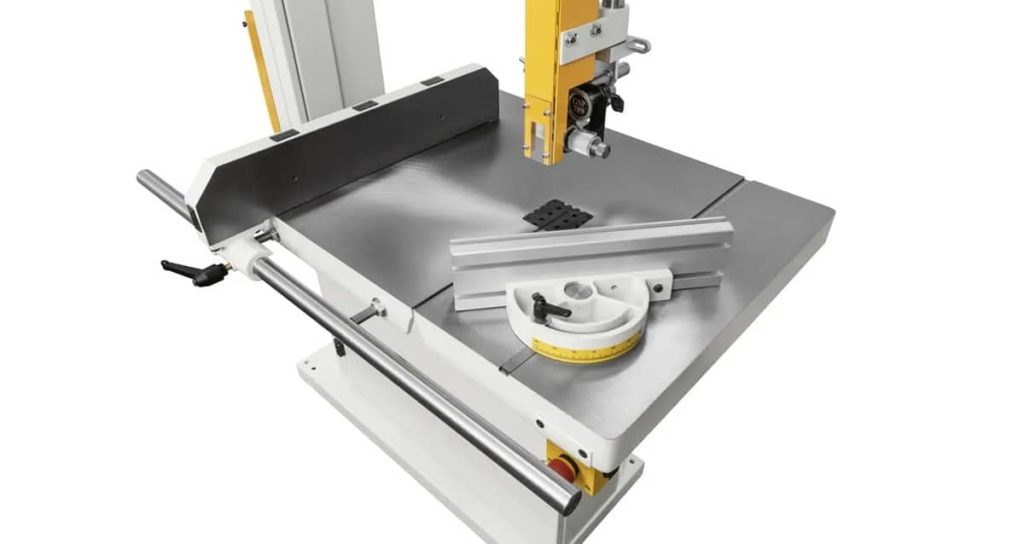
Once the blade is sorted and the saw is tuned correctly, the next improvements often come from the guides and the fence. Stock guide systems vary a lot from one machine to another. Some do the job reasonably well, while others leave room for improvement. Better guides help support the blade during taller, heavier cuts where stability matters most. Bearing guides are common because they are simple and easy to set. Ceramic guides are often chosen by users who spend more time resawing and want stronger blade support close to the cut. A tall, rigid resaw fence is just as important. Without one, it is harder to keep a tall board steady through a full pass, even on a powerful saw.
Dust Control and Table Setup Deserve More Attention Than They Get
A 20-inch bandsaw removes a lot of material, and that means dust builds up fast inside the cabinet, around the lower wheel, and near the guides. Better dust collection helps keep the saw cleaner, reduces packed debris, and makes long cutting sessions easier to manage. It also makes it easier to see what is happening during a resaw cut. The table matters just as much. A flat, smooth surface with a dependable lock-down system improves feed control, especially with large or heavy boards. Regular cleaning, a little wax on the table, and a quick check for looseness in the trunnion system can make the saw feel much better in daily use.
Common Errors After Moving Up to a 20-Inch Bandsaw
- Using low-cost blades and expecting the saw to perform at a high level.
- Skipping setup work and assuming the machine is the problem.
- Choosing a blade that is too narrow for serious resawing.
- Applying too much tension and wearing blades out early.
- Pushing stock too quickly and forcing the cut.
- Forgetting to reset guides after switching blade widths.
- Expecting perfect results from a saw that has not been adjusted properly.
Is a 20-Inch Bandsaw the Right Choice for Your Shop
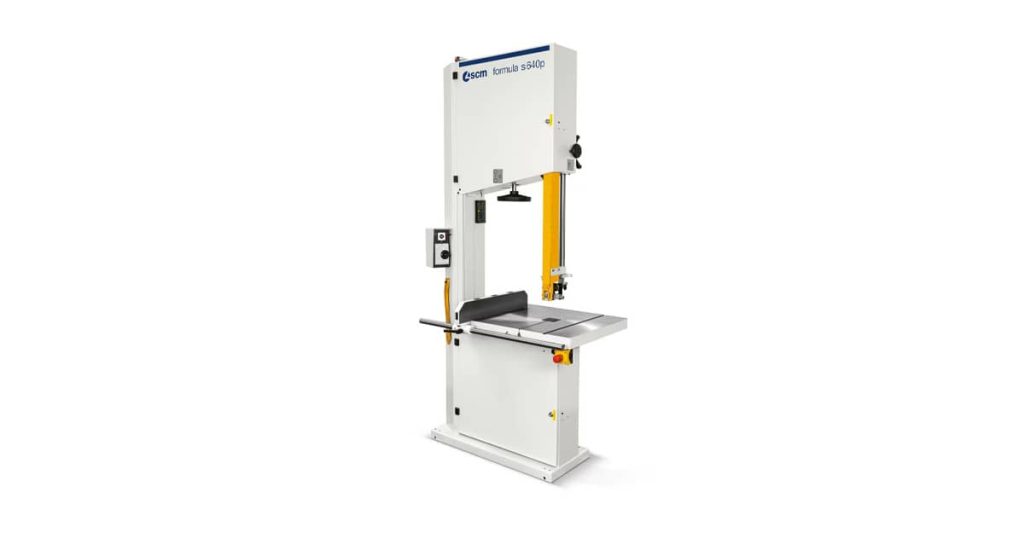
For some woodworkers, absolutely. A 20-inch bandsaw makes a strong case when thick hardwood resawing, repeatable straight cuts, and regular heavy use are part of normal shop work. The real benefit is not simply owning a bigger saw. It is removing the points where your current machine slows the work down. If your smaller saw still handles your projects without strain, there may be no reason to change. But if you keep running into limits with motor strength, blade tension, or resaw height, a 20-inch bandsaw can feel like a machine that finally matches the kind of work you are trying to do.
What to Improve First After the Upgrade
- Install a blade that matches the cutting you do most often.
- Tune the saw fully before spending money on extra parts.
- Upgrade the guides if the blade still feels unstable in heavy cuts.
- Add a tall, rigid resaw fence for better straight-line work.
- Improve dust collection in the lower cabinet and wheel area.
- Learn proper blade tension instead of relying only on the stock indicator.
- Keep the table clean, smooth, and easy to feed across.
Making the Most of a 20-Inch Bandsaw
A 20-inch bandsaw works best when you treat it as a complete setup rather than just a larger machine with more power. Blade choice, guide support, fence accuracy, dust collection, and tuning all affect how well it performs. That is why one woodworker may buy a large saw and see only a small improvement, while another ends up with a machine that cuts thick hardwood cleanly and predictably for years. If you do move up, start with blade quality, get the setup right, and then improve guide and fence performance. In everyday shop work, those changes usually make the biggest difference first.